Are Half Helmets Safe? What Every Rider Should Actually Know
Last Updated On: July 26, 2026
I still remember the first time I swapped my full face helmet for a half helmet on a warm afternoon ride. The wind on my face felt amazing. Within twenty minutes a rock kicked up by a truck ahead of me hit my cheek hard enough to leave a bruise, and I understood immediately why people ask this question so often.
So are half helmets safe? The honest answer is that they offer real protection, but far less than a full face helmet, and the gap matters most in exactly the situations riders don’t plan for: sudden stops, low speed tip overs, and crashes where the face makes first contact with the ground.
This guide walks through what the data actually says, how safety standards apply to half helmets, when they make sense, and how to choose a safer one if you decide to wear one.
The Short Answer
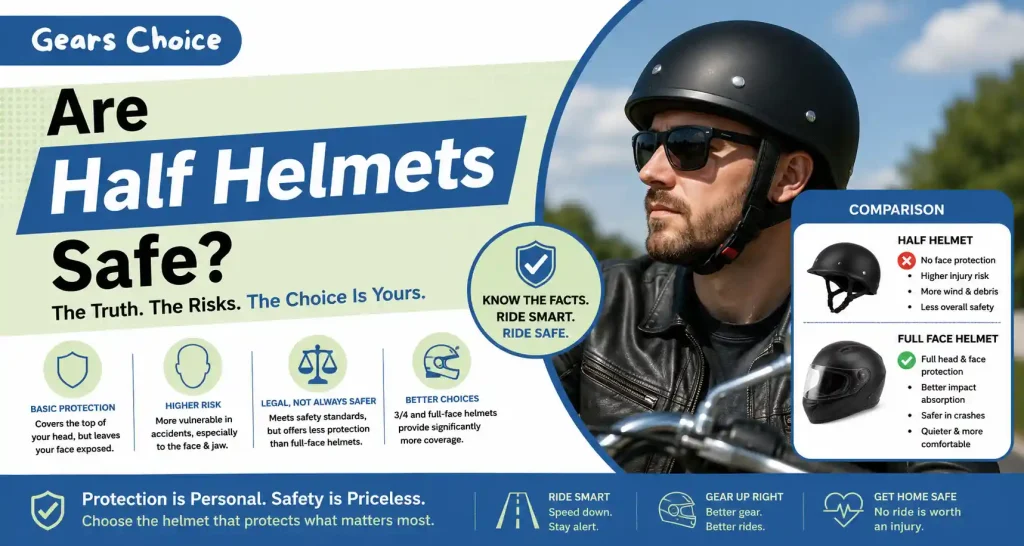
Half helmets, sometimes called shorty helmets or brain buckets, cover the top and back of the skull but leave the face, chin, and lower jaw exposed. They still absorb impact to the crown of the head, and a certified half helmet is dramatically safer than no helmet at all. What they don’t do is protect the face, which is one of the most commonly injured areas in a motorcycle crash.
According to the National Highway Traffic Safety Administration, any helmet sold in the United States must meet Federal Motor Vehicle Safety Standard 218 and carry a DOT certification label. That standard applies to half helmets too, but meeting the minimum bar for certification is not the same as offering the coverage of a full face design.
How Half Helmets Actually Perform in a Crash
A half helmet works the same way any hard shell helmet does. The outer shell spreads the force of an impact across a wider area, and a foam liner underneath compresses to absorb energy before it reaches your skull. That part of the system genuinely works, and it’s why even a basic half face helmet is far better than riding bare headed.
The problem is coverage, not construction. Once you go past the ears, there’s nothing there. In a low speed spill where a rider goes over the handlebars or slides off the seat, the face and chin often make contact with the pavement first. A full face or three quarter helmet would absorb that hit. A half helmet simply isn’t in the way.
There’s also the matter of retention. Wind pressure at highway speeds can work a loosely fitted half helmet on head positioning upward, and without a chin bar holding it in place, a poorly secured half helmet can shift or come off entirely during a crash sequence. This is one reason NHTSA’s motorcycle safety data shows helmeted riders overall have significantly better outcomes than unhelmeted riders, but the type of helmet still shapes what kind of injury a rider walks away with.
Safety Standards You Should Actually Understand
Not all “DOT approved” stickers mean the same thing, and knowing the difference helps you shop smarter.
- DOT (Department of Transportation). This is the legal minimum in the US. Manufacturers self certify that their helmet meets FMVSS 218, and NHTSA occasionally pulls helmets from the market for random testing. It’s a pass or fail standard rather than a graded one.
- Snell. The Snell Memorial Foundation runs its own independent lab testing, buying helmets off store shelves rather than relying on manufacturer submissions. Snell’s M2020 motorcycle standard generally demands more from a shell and liner than DOT alone, though Snell certification is voluntary, so plenty of good helmets simply don’t carry it.
- ECE. This European standard is common on imported helmets and includes some tests, like UV exposure and multiple helmet sampling per production run, that DOT does not require.
None of these standards test how much of your face is covered, because that’s a design choice, not a certification requirement. A half helmet can be fully DOT compliant and still leave your jaw and cheekbones with zero protection.
What the Injury and Fatality Data Shows
Numbers make this easier to reason about than opinions do.
The Insurance Institute for Highway Safety reports that helmets reduce the risk of death in a crash by roughly a third and cut the risk of traumatic brain injury by close to two thirds. That data doesn’t separate half helmets from full face helmets, but it confirms the baseline case for wearing any certified helmet.
Where the type of helmet starts to matter is facial injury. Riders in half helmets and open face designs consistently show higher rates of facial fracture and soft tissue injury in crash studies, simply because there’s no barrier between their face and whatever they hit. The CDC’s research on helmet law effectiveness also points out that when states weaken universal helmet laws, head injury rates climb measurably, which underlines how much helmet choice affects outcomes even before you get into helmet type.
Are Half Helmets Legal to Ride In?
Yes, in most states, though the legal picture varies. Some states only require any DOT compliant helmet without specifying coverage area, which is why half helmets remain legal and popular even though they cover less than other styles.
Others have age based or partial coverage laws rather than a universal requirement. The IIHS helmet law table breaks down exactly what each state requires, and it’s worth checking before you assume a half helmet meets your local law, especially if you’re riding across state lines.
Half Helmet vs Full Face vs Modular vs Three Quarter
Seeing the tradeoffs side by side usually makes the decision clearer than reading about them in paragraphs.
|
Helmet Type |
Face Coverage |
Best For |
Main Drawback |
|
Half helmet |
Top and back of head only |
Short, low speed rides in town |
No facial or chin protection |
|
Open face / 3/4 |
Head, ears, and back of neck |
Cruising, commuting at moderate speed |
Face still exposed |
|
Modular (flip up) |
Full coverage, chin bar flips open |
Riders who want full protection with convenience |
Heavier, more moving parts |
|
Full face |
Complete head and face coverage |
Highway riding, long trips, any high risk ride |
Less airflow, more visually restrictive |
If you want the full breakdown of how each design is built, our guide on the different types of motorcycle helmets covers the construction differences in more depth. And if you’re deciding between a half helmet and something with more coverage, our full face versus open face helmet comparison is a useful next read, since 3/4 motorcycle helmets sit in a similar middle ground and share some of the same tradeoffs. For riders who like the idea of full protection without giving up the option to flip the chin bar up at a stop, it’s also worth reading about what a modular helmet actually is before you decide.
When a Half Helmet Actually Makes Sense
Half helmets aren’t a bad choice in every situation. They tend to work well for:
- Short trips around town at speeds under 40 mph
- Cruiser riders who value visibility and airflow over maximum protection
- Riders layering in goggles or a face shield attachment for basic wind and debris protection
- Hot climates where a full face helmet becomes genuinely uncomfortable
A well built, vented half helmet can keep you noticeably cooler on a slow summer ride than a full face design, and for riders who stick to low speed, low traffic routes, that comfort tradeoff is a reasonable one to make. The calculation changes fast once you’re merging onto a highway, riding in heavy traffic, or covering long distances where fatigue and reaction time start to matter.
Fit Matters More Than People Realize
A half helmet that doesn’t fit properly loses most of its protective value before a crash even happens. If it shifts around during normal riding, it will move even more under crash forces, and a loose helmet is far more likely to come off on impact.
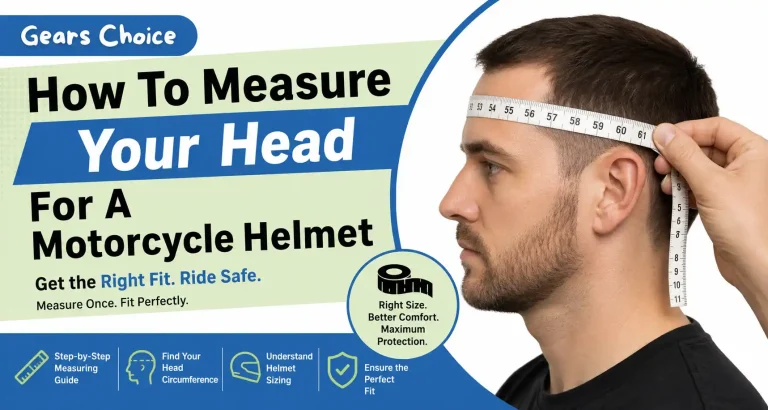
Snug the retention strap so two fingers fit between the strap and your chin, not more, and make sure the helmet sits level rather than tilted back off your forehead. Our guide on how a motorcycle helmet should fit walks through the full fitting process step by step, including how to check for pressure points and correct sizing before you buy.
How to Choose a Safer Half Helmet
If you’ve decided a half helmet fits your riding style, a few things separate a genuinely protective one from a novelty shell:
- Confirm the DOT label is legitimate. It should read the manufacturer name, model, DOT, FMVSS No. 218, and CERTIFIED, stamped or molded onto the back of the shell.
- Check the liner thickness. A thin, decorative foam pad is a red flag. Real EPS foam liners have noticeable density and don’t compress under light finger pressure.
- Look for a snug, adjustable retention system, not just a simple strap with no ratchet or buckle adjustment.
- Consider added coverage. Half helmets with ear coverage and a slightly extended back offer marginally more protection than the smallest shorty styles.
- Add eye protection. Goggles or a face shield attachment reduce debris injuries even though they don’t address facial impact risk.
Browsing a dedicated roundup like our best half helmet picks is a good way to compare certified options side by side rather than guessing from a product photo alone.
The Bottom Line
Half helmets are not unsafe in the sense of offering no protection. They meet legal standards, absorb real impact energy, and are far better than riding without a helmet. What they aren’t is equivalent to a full face helmet, and the gap shows up specifically in facial and jaw injuries during the exact kind of low speed spills that happen more often than dramatic highway crashes.
If you ride short distances at moderate speeds and understand the tradeoff, a quality, well fitted half helmet is a reasonable choice. If you’re covering highway miles, riding in traffic, or simply want the highest level of protection available, it’s worth stepping up to a full face or modular design instead. Either way, browsing the full range of helmet options at Gears Choice is a good starting point for finding certified gear that actually fits how you ride.
Frequently Asked Questions
Is a half helmet better than no helmet at all?
Yes, clearly. Any certified helmet reduces the risk of a fatal head injury compared to riding bare headed. A half helmet’s limitation is facial coverage, not head impact protection.
Do half helmets meet DOT standards?
Many do, and the label should confirm it. Coverage area and certification are two separate things, so always check for the actual DOT marking rather than assuming based on style.
What’s the safest type of motorcycle helmet?
A full face helmet offers the most complete protection because it covers the head, face, and chin in one shell. If you ride at higher speeds or for long distances, it remains the safest option available.
Can I wear a half helmet and still stay comfortable in hot weather?
Yes. A vented half helmet with functioning airflow channels is one of the more comfortable options for slow, hot weather riding, though comfort should be weighed against the reduced protection.

Hi, I’m James Dean. My motorbike obsession started at age seven with a 50cc bike, and I’ve been riding ever since. From motocross in my teens to cruising and snowmobiling today, I’ve got over 15 years of experience. As a mechanical engineer and passionate rider, I founded gearschoice.com to share my insights and help you find the best motorcycle gear.