How Much Does a Football Helmet Cost in 2026? Full Price Guide
Last Updated On: July 30, 2026
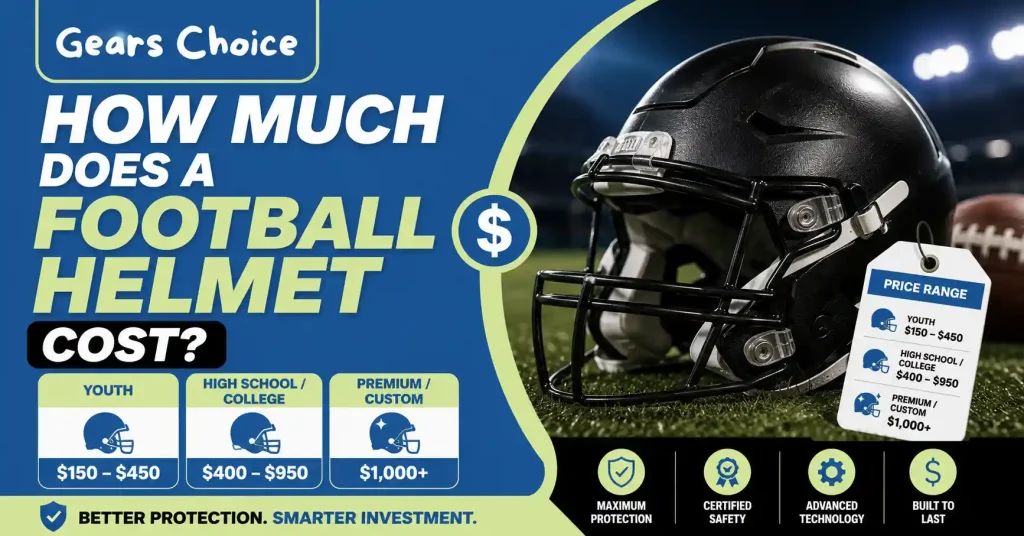
If you are shopping for a helmet, you already know the short answer will not satisfy you for long. The real cost of a football helmet depends heavily on who is wearing it. A new youth helmet typically runs between $150 and $450, a high school or college level helmet usually falls between $400 and $950, and a premium or fully customized adult helmet can climb past $1,000.
That is a wide spread, and the reason it is so wide comes down to certification, materials, fit technology, and brand. This guide breaks the cost of a football helmet down by player level, explains what actually drives the price up, and covers the extra costs that rarely show up until you are already at checkout.
Quick Price Overview
|
Helmet Level |
Typical Price Range |
What Usually Drives the Cost |
|
Entry level youth |
$150 to $300 |
Basic shell, standard foam liner |
|
Premium youth |
$350 to $470 |
Advanced padding, better fit system |
|
High school or midrange varsity |
$400 to $650 |
Polycarbonate shell, adjustable liner |
|
Premium varsity or college |
$650 to $950 |
Position specific design, upgraded facemask |
|
Personalized or pro grade |
$1,000 to $1,650 |
Head scan fitting, 3D printed liner, embedded tech |
These figures reflect the helmet shell and liner only. Many listings sell the facemask, chinstrap, and visor separately, which we will get to below.
How Much Does a Football Helmet Cost for Youth
Youth helmets look similar to adult versions, but they are built and tested differently. Younger players experience impacts at lower speeds and different frequencies than high school or college athletes, so manufacturers use lighter shells and different padding profiles to match.
A basic youth helmet with a standard foam liner generally sells for $150 to $300. Step up to a premium youth model with an advanced fit system, and the price moves into the $350 to $470 range. These premium options are the ones most often recommended by independent testers, since they tend to score better on impact reduction.
One thing worth planning for: kids grow fast. A helmet that fits perfectly this season may be too small next season, so many parents end up buying more than one helmet over a few years rather than a single helmet that lasts a decade. If you are unsure how to size correctly the first time, our guide on how to measure helmet size walks through the process step by step and can save you from an expensive fitting mistake.
How Much Does a College Football Helmet Cost
College programs generally use the same premium varsity helmets available at retail, just purchased in bulk and often customized with team colors and decals. At the individual level, a college football helmet costs roughly $400 to $950 depending on the model and whether it includes position specific engineering, such as designs built for linemen who take frequent, lower velocity hits versus skill position players who face fewer but harder impacts.
Programs with larger equipment budgets sometimes spend more per player once decals, custom paint, and reconditioning contracts are factored in. Individually, though, a player or parent buying a comparable helmet at retail should expect a similar range to what a program pays before any bulk discount.
How Much Does a Professional Football Helmet Cost
At the professional level, helmets are built with the most advanced materials and fit technology available, and the price reflects that. A professional football helmet typically costs between $550 and $1,650 depending on the model, with the highest prices attached to helmets that use a 3D head scan for a fully custom liner.
For context, a current catalog from Riddell’s official helmet lineup lists mid tier models near $550, while its top personalized model sits close to $1,650. Other manufacturers price their flagship helmets in a similar range once you include a titanium facemask and premium visor.
Why Are Football Helmets So Expensive
It is a fair question. A helmet is, at its core, a shell with padding inside, so why does the price climb so high? A few specific factors explain most of it.
- Certification and testing. Every legal football helmet must meet the NOCSAE performance standard before it can be sold or worn in organized play. Meeting this standard requires extensive impact testing across multiple zones of the helmet, and that testing cost gets built into the retail price. You can review the current requirements directly in NOCSAE’s official football helmet standard.
- Impact management materials. Cheaper helmets use standard foam padding. More expensive helmets replace that foam with TPU cushioning or inflatable air liners designed to spread impact force across a wider area and manage heat better. This kind of engineering is expensive to develop and manufacture at scale.
- Fit technology. A helmet that does not fit correctly cannot protect a player as well as it is designed to, regardless of price. This is why premium helmets increasingly use adjustable liners or full head scans rather than a one size fits most approach. Custom fitting hardware adds real manufacturing cost.
- Independent safety ratings. Buyers increasingly compare helmets using the STAR rating system published by Virginia Tech’s Helmet Lab, which scores helmets from one to five stars based on how well they reduce measured head acceleration. You can see the current results for adult and youth models in Virginia Tech’s varsity football helmet ratings and its separate youth football helmet ratings. Helmets that score well in these independent tests tend to sell at a premium because manufacturers have invested more heavily in the materials and design needed to earn that score.
- Quick release systems. Many modern helmets use a quick release facemask or chinstrap mechanism so medical staff can remove the helmet fast during an injury without twisting the player’s neck. Older, simpler designs do not have this feature, which is part of why they were cheaper.
If you want to understand exactly what is inside that shell driving all of this, our breakdown of what football helmets are made of covers the shell, liner, and facemask materials in more detail.
Extra Costs Most Buyers Forget
The listed helmet price is rarely the full amount you will actually spend. Here is what tends to get added on:
- Facemask: $35 to $80, and sometimes sold separately from the helmet shell
- Chinstrap: $10 to $45, with premium quick release straps at the top of that range
- Visor: $45 to $80
- Custom paint or team decals: $35 to $150 depending on complexity
- Reconditioning after a season: $100 to $175 or more, not counting damaged parts
Add those up on a $550 helmet and a first season total can realistically land closer to $750 or $800 once tax and shipping are included. It is a good idea to check whether a listing includes the facemask and chinstrap before comparing two prices side by side, since one listing might look cheaper simply because it leaves those parts out.
Helmets also need regular upkeep to stay safe and usable. Basic maintenance like cleaning the padding and shell will not restore certification on its own, but our guide on how to clean a football helmet is a useful starting point between full reconditioning cycles.
Cost Per Season: A Simple Example
Thinking about the helmet price as a one time cost misses part of the picture. Here is a simple way to look at long term value. Say a player buys a $465 premium youth helmet and reconditions it twice over the next two seasons at roughly $110 each time.
That is $685 total across three seasons of use, or about $228 per season. Compare that to buying a cheaper $200 helmet every single season because the padding wears out or the player outgrows it, and the premium option can actually work out to a similar or lower cost per season, while offering better measured protection along the way.
This is also why weight matters alongside price. A heavier helmet is not automatically safer, and comfort affects how consistently a player wears it correctly. If weight is a factor in your decision, our article on how much a football helmet weighs breaks down typical weights by helmet type.
Final Thoughts
There is no single number that answers what a football helmet costs, and any article that gives you one flat figure is oversimplifying. The real cost of football helmet ownership depends on the player’s level, how much you spend on the facemask, chinstrap, and visor, and how often the helmet needs reconditioning. Youth players can expect to spend $150 to $450, high school and college players usually land between $400 and $950, and professional grade or fully customized helmets can reach $1,000 to $1,650.
Whatever budget you are working with, treat the independent safety rating as more important than the price tag alone, and make sure the helmet is properly fitted before the season starts. For more buying guides like this one, browse the full collection on the Gears Choice, or check out our related guide comparing costs across other contact sports like our hockey helmet buying guide if you are outfitting a multi sport athlete.
Frequently Asked Questions
How much does an NFL helmet cost?
An NFL grade helmet generally costs between $550 and $1,650 at retail, depending on the model and whether it includes a custom fit liner. Teams typically supply helmets to players, so this range reflects what a consumer would pay for the same or a comparable model.
How much does an NFL quarterback helmet cost?
There is no separate helmet built specifically for quarterbacks. Quarterbacks generally wear the same helmet models as other players on the roster, often selected based on personal comfort and fit rather than position, so the price falls within the same $550 to $1,650 range as any other professional grade helmet. Players do sometimes choose different facemask styles for visibility, which can shift the total cost slightly.
How much does an NFL helmet cost to make?
Manufacturers do not publish exact production costs, since materials, tooling, and labor figures are considered proprietary. What is publicly known is that the retail price reflects far more than raw materials. It also covers the extensive NOCSAE certification testing, the research behind impact absorbing liners, and fit technology such as head scanning, all of which add cost well beyond basic manufacturing.
Does a more expensive football helmet mean better protection?
Not automatically. Price is not a safety score. The most reliable way to judge protection is to check a helmet’s independent rating rather than assume a higher price guarantees better performance. No helmet, regardless of cost, can fully prevent a concussion.
How long does a football helmet typically last?
Most helmets can be reconditioned and recertified for several years, often up to around a decade depending on the manufacturer and how well the helmet has been maintained, but a cracked shell, failed inspection, or a player outgrowing the fit can end usable life much sooner.

Hi, I’m James Dean. My motorbike obsession started at age seven with a 50cc bike, and I’ve been riding ever since. From motocross in my teens to cruising and snowmobiling today, I’ve got over 15 years of experience. As a mechanical engineer and passionate rider, I founded gearschoice.com to share my insights and help you find the best motorcycle gear.