Is it illegal To Ride A Bike Without A Helmet? Know The Truth
Last Update: July 16, 2026
Short answer: It depends entirely on where you live and how old you are. There is no single nationwide rule. Some states require helmets only for kids, some cities require them for everyone, and thirteen states have no bicycle helmet law of any kind, at the state or local level.
That patchwork is exactly why so many people search for a straight answer before they hop on a bike. Below is a full breakdown of who actually has to wear one, what the fines look like, and why a properly fitted helmet is still worth putting on even when the law doesn’t force your hand.
Key Takeaways
Fines for violating a helmet law are usually small, often in the twenty five to fifty dollar range, and are rarely enforced aggressively.
There is no federal bicycle helmet law in the United States.
Twenty two states, including the District of Columbia, have a statewide law, and every one of them applies to minors only.
No state currently requires adults to wear a bicycle helmet, though a number of cities and counties do.
Thirteen states have no helmet law at all, at any level of government.
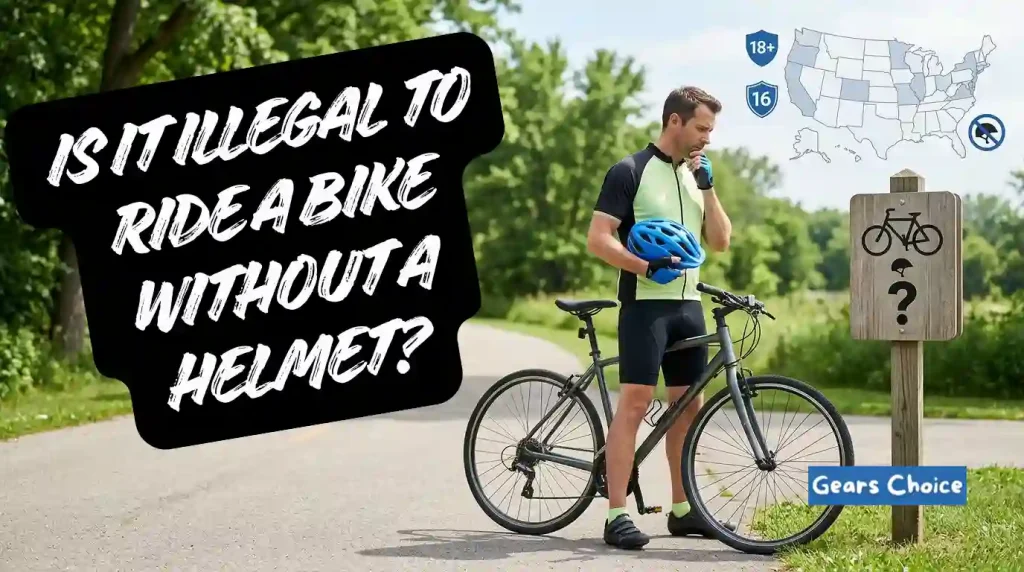
Do You Have To Wear A Helmet On A Bicycle?
In most of the country, no, unless you’re a minor riding somewhere your state or city has a law on the books. Roughly twenty nine states have no statewide requirement whatsoever. Of those, about sixteen have individual cities or counties that fill the gap with their own local ordinances, and some of those local rules apply to riders of every age, not just kids.
So the honest answer is that whether you have to wear a helmet comes down to three questions: which state you’re in, whether your city or county has passed its own rule, and how old you are. There is genuinely no way to answer this for the whole country in one sentence, which is exactly why checking your specific location matters more than any general rule of thumb.
Is It A Law To Wear A Helmet On A Bike?
It can be, but it isn’t automatic. Congress has never passed a national bicycle helmet requirement, so this has always been left to individual states and, in turn, to individual cities and counties within those states. That’s a very different setup from something like seatbelt laws, which exist in nearly every state in a fairly consistent form.
Because of that structure, a helmet law in one town might not exist a few miles away in the next town over, even within the same state. New York is a good example. The state only requires helmets for riders under 14, but Rockland County and the town of Greenburgh both passed local laws that apply to every rider regardless of age. If you’re planning a ride somewhere new, a quick search for “[your city] bicycle helmet ordinance” is worth the thirty seconds it takes.
Bicycle Helmet Laws By State
Here’s a condensed look at where things stand across the country, compiled from state statute summaries and the Insurance Institute for Highway Safety’s tracking of state level requirements. States not listed as having a statewide law may still have city or county ordinances, so treat this as a starting point rather than the final word for your exact address.
|
State |
Statewide Requirement |
|
Alabama |
Riders under 16 |
|
Alaska |
None statewide; some cities require it |
|
Arizona |
None statewide; some cities require it |
|
Arkansas |
No state or local law |
|
California |
Riders under 18 |
|
Colorado |
No state or local law |
|
Connecticut |
Riders under 16 |
|
Delaware |
Riders under 18 |
|
District of Columbia |
Riders under 16 |
|
Florida |
Riders under 16 |
|
Georgia |
Riders under 16 |
|
Hawaii |
Riders under 16 |
|
Idaho |
No state or local law |
|
Illinois |
None statewide; some cities require it |
|
Indiana |
No state or local law |
|
Iowa |
No state or local law |
|
Kansas |
None statewide; some cities require it |
|
Kentucky |
None statewide; some cities require it |
|
Louisiana |
Riders under 12 |
|
Maine |
Riders under 16 |
|
Maryland |
Riders under 16 |
|
Massachusetts |
Riders under 17 |
|
Michigan |
None statewide; some cities require it |
|
Minnesota |
No state or local law |
|
Mississippi |
None statewide; some cities require it |
|
Missouri |
None statewide; many local ordinances |
|
Montana |
None statewide; some cities require it |
|
Nebraska |
No state or local law |
|
Nevada |
None statewide; a few local ordinances |
|
New Hampshire |
Riders under 16 |
|
New Jersey |
Riders under 17 |
|
New Mexico |
Riders under 18 |
|
New York |
Riders under 14 (some counties cover all ages) |
|
North Carolina |
Riders under 16 |
|
North Dakota |
No state or local law |
|
Ohio |
None statewide; many local ordinances |
|
Oklahoma |
None statewide; some cities require it |
|
Oregon |
Riders under 16 |
|
Pennsylvania |
Riders under 12 |
|
Rhode Island |
Riders under 16 |
|
South Carolina |
No state or local law |
|
South Dakota |
No state or local law |
|
Tennessee |
Riders under 16 |
|
Texas |
None statewide; many local ordinances |
|
Utah |
No state or local law |
|
Vermont |
No state or local law |
|
Virginia |
None statewide; many local ordinances covering riders under 15 |
|
Washington |
None statewide; many cities require it for all ages |
|
West Virginia |
Riders under 15 |
|
Wisconsin |
None statewide; one local ordinance |
|
Wyoming |
No state or local law |
Even within states that share the same rule on paper, penalties and enforcement can vary by county, so this table is meant as a general map rather than a legal document. For the most current, city level detail, the Bicycle Helmet Safety Institute keeps one of the most thorough running lists available.
How Old Do You Have To Be To Not Wear A Helmet?
This is really the flip side of the state table above, and it depends on your state. In places with a statewide law, the cutoff age typically falls somewhere between 12 and 18. New York and Pennsylvania set the bar lower, at 14 and 12. California, Delaware, and New Mexico set it higher, at 18. Once you cross that age threshold, the state law simply stops applying to you, though a local ordinance could still require a helmet regardless of age.
If you’re a parent trying to figure out when your kid can legally ditch the helmet, checking your specific state’s cutoff (and any local ordinance in your town) is the only reliable way to know for sure, since guessing based on a neighboring state can easily lead you astray.
Do Adults Have To Wear Helmets While Riding A Bicycle?
Statewide, no. Not a single U.S. state currently requires adults to wear a bicycle helmet. Every one of the twenty two statewide laws is written to cover minors only.
That said, “statewide” is doing a lot of work in that sentence. A number of cities and counties have passed all ages ordinances that do apply to adults, including places in Washington State, parts of Missouri, and a handful of communities elsewhere.
If you’re riding somewhere unfamiliar, it’s worth a quick check of the local municipal code before you assume the rules are the same as back home. The Governors Highway Safety Association tracks statewide requirements and is a solid starting point if you want to confirm your own state’s rule.
Electric Bikes, Scooters, and Other Rides
Ebike riders often assume the same rules as regular bicycles apply, but that isn’t always true. Several states that have no standard bicycle helmet law still require helmets for ebike riders, particularly on faster Class 3 ebikes that can hit 28 miles per hour. Connecticut, for example, requires helmets for all Class 3 ebike riders regardless of age, even though its regular bicycle law only covers riders under 16.
Scooters and skateboards can carry their own separate rules too, especially in states like California that folded them into the same statute as bicycles. If you’re weighing helmet styles for that kind of higher speed riding, it’s also worth reading up on whether half helmets offer enough coverage before you buy one for anything faster than a casual ride.
If you’ve upgraded to an ebike or you’re shopping for one, it’s worth pairing that purchase with a helmet built for higher speed impacts rather than a basic model. Understanding what MIPS technology does inside a helmet is a good place to start if you want extra protection for faster rides.
Fines And Penalties
Where helmet laws do exist, the penalties tend to be modest. California’s fine sits at 25 dollars, and the state even allows riders to have the citation dismissed if they complete a bicycle safety course and show proof of an approved helmet afterward. Oregon’s fine is also 25 dollars.
Most jurisdictions treat a helmet citation as a minor infraction rather than anything that shows up on a driving record, and enforcement is generally light compared to something like a seatbelt stop. That low bar for enforcement is part of why public health groups tend to push harder for education and free helmet programs than for stricter tickets. A fine rarely changes behavior on its own, but a properly fitted helmet sitting in the garage does.
Why Helmets Still Matter
Even in the states with zero legal requirement, the safety case for wearing one is hard to ignore. According to the NHTSA, bicyclist deaths in the United States have averaged around 800 per year in recent data, and a large share of fatal crashes involve riders who weren’t wearing head protection. The CDC similarly points out that helmet laws are one of the most effective tools for both increasing helmet use and reducing crash related injuries among riders of every age.
Independent research backs that up. A large scale review of over 64,000 cyclists found that helmet use reduced the risk of any head injury by roughly 51 percent, cut the risk of a serious head injury by about 69 percent, and lowered the risk of a fatal head injury by around 65 percent. None of that depends on whether your specific city has passed an ordinance. A helmet works the same way whether or not a police officer is watching.
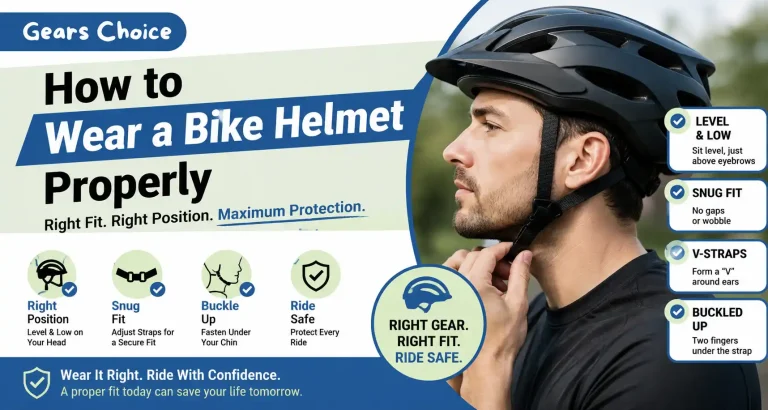
If your current helmet is a few years old or doesn’t fit quite right anymore, it’s worth double checking how to properly wear and adjust a bike helmet before your next ride, since even a good helmet won’t protect you much if the straps are loose or it sits too far back on your head.
Helmet Laws Outside The United States
The patchwork approach isn’t unique to America. Countries like Australia and New Zealand require helmets for cyclists of all ages nationwide, and both have kept that rule in place for decades with high compliance rates. Canada handles it province by province, similar to how U.S. states operate, with places like Nova Scotia and British Columbia covering all ages while others only cover children.
Spain requires helmets outside of city limits but not within them, and several European countries, including France, only mandate helmets for young children. If you’re planning to cycle abroad, it’s worth a quick search specific to that country rather than assuming U.S. style rules, or the total absence of rules, will carry over.
Can I Ride A Bike Without A Helmet?
Legally, in most of the country and if you’re an adult, yes. There’s no state that will ticket an adult rider simply for going without one, though a specific city ordinance could change that in a handful of places. If you’re under your state’s age cutoff, the answer flips, and skipping the helmet could mean a citation.
But legality and safety aren’t the same conversation. Even where it’s perfectly legal to skip one, a helmet remains one of the cheapest and most effective ways to protect yourself if something goes wrong. Browsing a well reviewed helmet or comparing a few models on Gears Choice takes a few minutes and could matter a lot more than that if you ever take a hard fall.
Frequently Asked Questions
Is It Illegal To Not Wear A Helmet On A Bike?
Only if your state or local ordinance requires one for your age group. If you’re an adult in a state without an all ages local law, going without a helmet isn’t illegal. If you’re under the applicable age cutoff, it typically is.
Is It Illegal To Not Wear A Helmet?
For bicycles specifically, this again comes down to age and location rather than a blanket national rule. Compare that to motorcycle helmet laws, which are far more consistent across states and apply to riders and passengers regardless of age in most of the country.
Do You Need To Wear A Helmet On A Bike?
Legally, only if your state, county, or city requires it based on your age. Practically, safety experts and organizations like the CDC and NHTSA recommend one for every rider, every ride, regardless of what the local statute says.
What happens if I get caught without a helmet where it’s required?
You’ll typically receive a citation with a fine, often in the 25 to 50 dollar range, and in some states like California the ticket can be dismissed if you show proof of a helmet and complete a short safety course afterward.
Do bike share and rental bikes come with helmets?
Rarely. Most bike share programs leave helmet use up to the rider, and rental shops usually offer helmets separately rather than including them automatically, so it’s worth asking before you ride off.
Is a used bike helmet safe to wear?
Not always. Helmets are designed to absorb one significant impact and then be replaced, so a used helmet with an unknown history could already be compromised even if it looks fine on the outside. If you’re unsure how a new one should fit, measuring your head correctly first will save you a return trip.
Note: This article is provided for general informational purposes and isn’t legal advice. Local rules on this topic change and vary by city and county, so confirm current requirements with your state Department of Transportation or local municipal code before you ride.

Hi, I’m James Dean. My motorbike obsession started at age seven with a 50cc bike, and I’ve been riding ever since. From motocross in my teens to cruising and snowmobiling today, I’ve got over 15 years of experience. As a mechanical engineer and passionate rider, I founded gearschoice.com to share my insights and help you find the best motorcycle gear.