How To Clean A Motorcycle Helmet Visor (Complete Guide)
Last Updated On: July 27, 2026
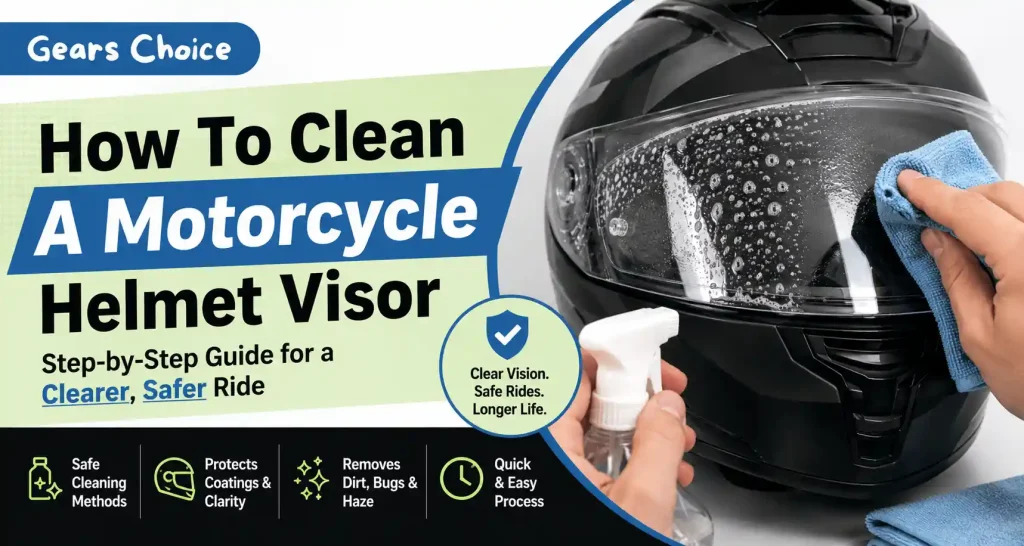
Every rider eventually looks through a visor covered in bug residue, road film, and a haze of fine scratches and wonders if there is a better way to do this. There is. Learning how to clean motorcycle visor surfaces the right way takes about ten minutes and a handful of household items, and it will noticeably extend the life of one of the most important pieces of safety gear you own.
Your visor is not just a windshield for your face. It is an optically correct, impact rated component with coatings built to resist scratches and fogging. Clean it the wrong way, with paper towels, glass cleaner, or aggressive scrubbing, and those coatings wear off faster than normal riding ever would. Clean it the right way, and it stays clear for years.
This guide walks through the full process from the first wipe to the final polish, plus how to handle Pinlock lenses, minor scratches, and the interior surface that never seems to get enough attention.
Why A Clean Visor Matters More Than You Think
A dirty or scratched visor is more than an annoyance. It scatters light, creates glare from oncoming headlights at night, and can hide a pothole or a merging car just long enough to matter. The Motorcycle Safety Foundation lists eye protection as one of the core functions of a full face helmet, right alongside impact protection, and a visor covered in grime or hairline scratches struggles to do that job properly, according to its rider protective gear resource (Motorcycle Safety Foundation).
The National Highway Traffic Safety Administration also points out that a helmet only protects you as well as its condition allows, which is one more reason to treat visor cleaning as basic maintenance rather than an occasional chore (NHTSA). Your visor works differently depending on what you ride too. Full face and modular lids lean on the shield heavily for weather and wind protection, while other types of motorcycle helmets use it more sparingly, so the cleaning routine below is written with full coverage helmets in mind.
What You Will Need
You do not need anything exotic sitting under your sink. Gather these before you start so you are not hunting for a cloth halfway through with soapy hands:
- Two or three clean microfiber cloths
- Lukewarm water
- Mild dish soap or baby shampoo
- A soft bristle brush or cotton swab for vents and edges
- Rubber gloves, optional, if the water is hot
- A dry towel to rest the helmet on
- A visor polish for light scratches, optional
Best Way To Clean Helmet Visor: Step By Step
- Set up in a shaded, well lit spot. Lay a dry towel down and rest the helmet on it with the visor closed. Direct sunlight dries soap too quickly and leaves streaks.
- Remove the visor if your helmet allows it. Most modern shields use a quick release system. Taking it off keeps water and cleaning solution away from the interior padding and any communicator wiring. Shoei’s own maintenance guidance recommends removing the shield whenever possible for exactly this reason (Shoei).
- Pre soak the grime. Wet a microfiber cloth or paper towel with warm water and drape it over the exterior of the visor for a few minutes. This softens dried bugs and road film so you lift debris off instead of dragging it across the surface.
- Wipe with light, straight strokes. Once the residue has softened, remove it with gentle, single direction passes. Never scrub in circles over a spot that still has debris stuck to it, since that is exactly how fine scratches happen.
- Wash with mild soap. Mix a small amount of dish soap or baby shampoo into warm water, load a fresh microfiber cloth, and wipe both sides of the visor using even, straight passes.
- Work the edges and vents. Grime tends to collect around the pins, edges, and ventilation slots. A soft brush or cotton swab reaches these spots without touching the main viewing surface.
- Rinse thoroughly. Use a clean, damp cloth and keep wiping until no soap film remains. Leftover residue smears the moment you ride through rain or morning fog.
- Pat dry, then air dry at an angle. Blot the visor with a dry microfiber cloth rather than wiping it, then lean it against something at an angle instead of laying it flat. Flat drying tends to leave water spots behind.
- Reinstall and test the mechanism. Once it is completely dry, click the visor back into place and open and close it a few times to confirm it seats properly before your next ride.
How To Clean Motorcycle Helmet Visor Inside
The inside of your visor usually gets less attention than the outside, yet it is often the side carrying the delicate anti fog layer, so it deserves a gentler touch, not a harsher one.
Dip a soft microfiber cloth in warm water with a drop of baby shampoo, wring it out until it is damp rather than wet, and wipe the inner surface in one direction only. Skip circular motions here, since anti fog coatings are thinner than the exterior’s anti scratch layer and rub off more easily under pressure. Rinse with a second damp cloth and let the surface air dry fully before you close the visor again.
While the shell is open, it is worth giving the rest of the interior the same care. Our guide on how to clean helmet inside covers the liner and padding in detail, and our broader walkthrough on how to clean a motorcycle helmet covers the shell, vents, and straps if you want to handle the whole lid in one sitting.
How To Clean Motorcycle Helmet Visor Scratches
Light surface haze, the kind that shows up as general dullness rather than a defined line, can sometimes be improved with a plastic polish made for visors or eyewear. Apply a small amount to a microfiber cloth, work it in using straight strokes, then buff away any residue with a dry cloth. Deeper scratches are a different story. Once a scratch is deep enough to catch a fingernail, polish will not remove it, only mask it slightly, and no amount of buffing restores the optical clarity you had on day one.
The Snell Memorial Foundation, an independent nonprofit that sets helmet safety standards, advises inspecting helmets and their components regularly and replacing any part that shows damage capable of affecting performance (Snell Memorial Foundation). A visor with deep scratches sitting across your direct line of sight falls into that category, and swapping in a fresh shield is the safer call, especially if you ride at night or into low sun.
Caring For Anti Fog Coatings And Pinlock Lenses
Many modern visors ship with a factory anti fog layer, a Pinlock insert, or both, and each one needs slightly different handling.
How To Clean Helmet Visor With Pinlock Installed
Pinlock lenses are made from a soft, moisture absorbing material that scratches far more easily than the visor itself. Pinlock’s own maintenance instructions recommend removing the lens from the visor before cleaning, rinsing it with plain water or a very mild soap solution, and drying it with a clean microfiber cloth instead of rubbing it against anything abrasive (Pinlock). Never use alcohol, ammonia, or standard glass cleaner on a Pinlock lens, since these strip the coating responsible for its anti fog properties.
How To Clean Anti Fog Visor
If your visor has a built in anti fog treatment rather than a separate insert, treat it the same way you treat the interior surface: mild soap, warm water, a soft cloth, and single direction wipes. Aggressive scrubbing or solvent based cleaners wear the coating down faster than normal use ever would, leaving you right back where you started with the fogging problem the coating was meant to prevent.
What To Avoid When Cleaning Your Visor
If you take away only one rule for how to clean motorcycle helmet visor without scratching it, make it this one: never wipe a dry visor. Dust and grit act like fine sandpaper the moment you drag a cloth across them without moisture to float the particles away first.
Beyond that, keep these out of your cleaning kit entirely:
- Paper towels and tissues, which contain wood fibers that can mark soft coatings
- Household glass cleaners, ammonia, and alcohol based sprays, which strip anti fog and anti scratch layers
- Any solvent, degreaser, or petroleum based product
- High pressure washers, which can force water past the visor seal and into the padding or electronics
- Dry towels or shirts used to buff away bugs before they have been softened with water
Motorcycle Helmet Visor Cleaner: What To Look For
If you would rather not mix your own solution, a dedicated cleaning spray takes the guesswork out of dilution and works well for quick touch ups between full washes. Look for a formula labeled safe for polycarbonate and coated visors, free of ammonia and alcohol, and ideally sold with a microfiber cloth included.
Muc Off makes a widely available spray built specifically for helmet visors, lenses, and goggles, and similar formulas are sold by most major helmet brands under their own accessory lines. Whichever you choose, spray it onto the cloth rather than directly onto the visor to keep the solution from pooling around the edges and seeping past the seal.
How Often Should You Clean Your Visor
A quick wipe with a damp microfiber cloth after every ride keeps grime from building up in the first place and takes less time than parking your bike. Save the full soap and water clean for once a week during riding season, or any time you have come off a bug heavy stretch of highway.
If fogging is your main frustration rather than dirt, a clean visor only solves part of the problem. Our guide on how to stop helmet visor fogging covers ventilation habits, anti fog inserts, and a few other tricks that work alongside a clean lens.
And if your current visor is scratched beyond saving or you are shopping for a new lid altogether, our roundup of the best full face helmets is a good place to compare shield quality and coating options before you buy. You can browse our full range of helmet guides and reviews on the Gears Choice any time you need a starting point.
Final Thoughts
Cleaning a motorcycle helmet visor is not complicated, but it rewards patience over speed. Soak before you wipe, use mild soap instead of anything stronger, dry it at an angle, and treat Pinlock lenses and anti fog coatings with extra care. Stick to that routine and your visor will stay clear, scratch free, and ready to do its most important job, which is helping you see everything the road throws at you.
Frequently Asked Questions
What is the best way to clean a motorbike helmet visor?
Soak first to loosen debris, then wash with a mild soap and warm water solution using straight wipes rather than circles, rinse thoroughly, and dry the shield at an angle rather than lying it flat. That sequence protects both the anti scratch and anti fog coatings regardless of which brand or style of lid you ride.
What is the best way to clean a motorcycle helmet overall, not just the visor?
Treat the shell, vents, and straps with the same mild soap and warm water approach, and remove the interior padding to hand wash separately if it comes out. The shell can tolerate slightly firmer scrubbing than the visor, but the rule about avoiding solvents, ammonia, and high pressure water applies across every part of the helmet.
Can I use glass cleaner or Windex on my visor?
No. Household glass cleaners are usually ammonia based, and ammonia breaks down the anti scratch and anti fog coatings on modern visors. Stick to mild soap and water, or a cleaner made specifically for helmets and eyewear.
How often should I replace a visor instead of cleaning it?
If scratches sit directly in your line of sight, cloud your vision in bright sunlight or oncoming headlights, or the visor no longer seals tightly against the helmet, replacement is the safer choice over another round of cleaning.
Is it safe to remove my visor every time I clean it?
Yes, for most modern helmets. Quick release systems are designed for repeated removal, and taking the shield off is actually the safer habit since it keeps water and soap away from the padding and any installed electronics.

Hi, I’m James Dean. My motorbike obsession started at age seven with a 50cc bike, and I’ve been riding ever since. From motocross in my teens to cruising and snowmobiling today, I’ve got over 15 years of experience. As a mechanical engineer and passionate rider, I founded gearschoice.com to share my insights and help you find the best motorcycle gear.