Shoei GT Air 2 Review (2026): Comfort, Noise & Touring Test
Last Updated: Feb 19, 2026
The Shoei GT‑Air II is a premium full‑face sport‑touring helmet aimed at riders who want strong safety, low wind noise, and everyday touring comfort in one package. It sits in Shoei’s lineup as a road‑focused alternative to pure race helmets, with features like an internal sun visor and intercom‑ready design for long‑distance and commuter use.
Use it if you mostly ride on the road, tour, or commute and want quieter aerodynamics and comfort over track‑focused minimalism. If you think that your current helmet cannot properly protect your head and neck, try the Shoei GT-Air II Helmet right now.
It will definitely take your life safety to another level. No doubt, the brand has gained maximum support and praise for making premium bike helmets. They have hundreds of loyal customers who have backed their models. And this reviewed model belongs to their world-class helmet line.
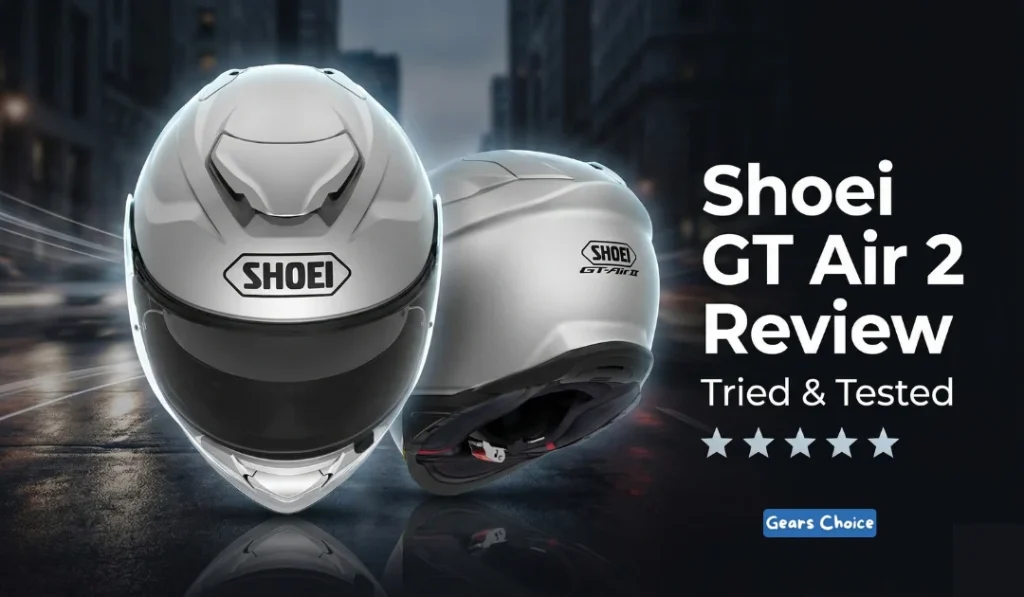
Overview of Shoei GT-Air 2 Helmet
The Shoei GT‑Air II is a premium full‑face sport‑touring helmet designed to give road riders a blend of high‑end safety, comfort and low wind noise for everyday use and long‑distance trips. It builds on the original GT‑Air with a refined AIM shell, improved ventilation, a longer internal sun visor and an intercom‑ready design that works especially well with units like the SENA SRL2.
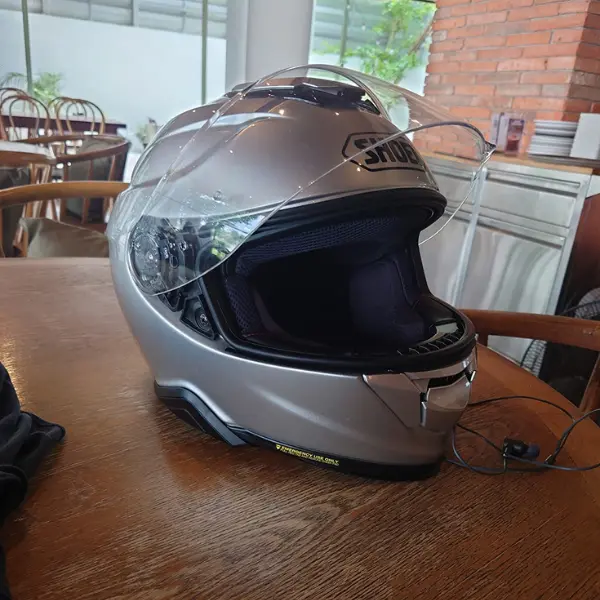
Here at Gears Choice, we rate the GT‑Air 2 as an excellent option if you want a quieter, more stable helmet for touring and commuting without sacrificing build quality or premium features.
Key Specifications
|
Specs |
Detail |
|---|---|
|
Helmet type |
Full‑face sport‑touring helmet |
|
Shell construction |
Shoei AIM (Advanced Integrated Matrix) multi‑composite shell |
|
Shell sizes |
4 shell sizes (S, M, L, XL) |
|
Safety standard |
|
|
Strap type |
Micro‑ratchet quick‑release chin strap |
|
Internal sun visor |
QSV‑2 drop‑down sun visor with extended coverage |
|
Main visor |
Clear visor with “cracked‑open” position and Pinlock‑ready/Pinlock included on many bundles |
|
Ventilation |
3 intake vents, 5 exhaust ports, wind‑tunnel‑optimized |
|
Intercom compatibility |
Designed for seamless integration with SENA SRL2 system |
|
Typical use |
Touring, commuting, all‑round road riding |
Comfort and Fit
Shoei offers the GT‑Air II in four shell sizes with different interior pad options, which helps most riders get a snug, touring‑friendly fit rather than a race‑tight squeeze. The interior uses a plush, removable lining that feels soft against the skin and breaks in over time, reducing any initial tightness or hot spots for many head shapes.
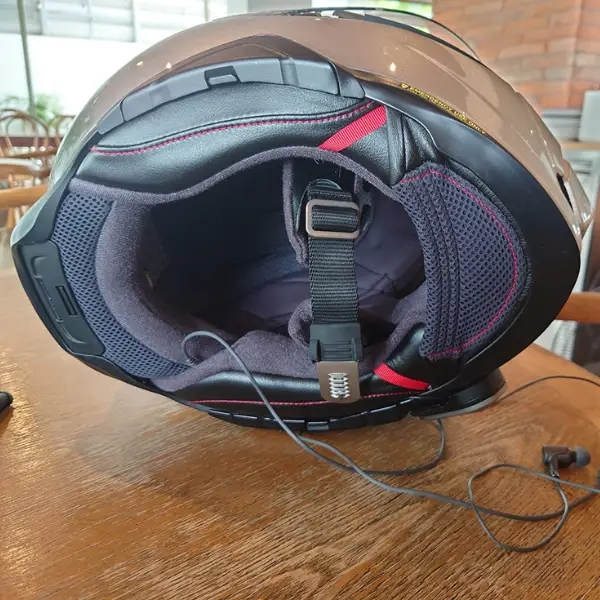
If you sit between sizes or feel pressure on cheeks or crown, Shoei and many dealers can swap pads to fine-tune the fit, which is a big plus for long‑distance comfort. Overall, it’s built to be worn all day on tours or long commutes without excessive neck fatigue, especially compared to heavier or cheaper lids.
What Head Shape Does the GT-Air 2 Fit?
The GT-Air 2 is shaped for an intermediate oval head, which means it is slightly longer front-to-back than it is side-to-side. If your head is round, meaning roughly equal in all directions, you may feel noticeable pressure on the sides of your head, especially around the temples.
Shoei’s fit tends to be slightly narrower across the temples compared to Arai, which runs rounder. If you have tried an Arai and found it comfortable but slightly too loose, Shoei will likely suit you well. If Arai felt perfectly snug, it is worth trying the Shoei in a shop before committing, especially if you plan to wear it for hours at a time.
Quick Tip: Measure your head at its widest point just above the eyebrows. If front-to-back is noticeably longer than side-to-side, you are intermediate oval and the GT-Air II should fit well. If both measurements are roughly equal (round head), try it on for at least 30 minutes before buying.
Pressure Points and Break-In Period
A new Shoei GT-Air 2 will feel tight, and some riders experience specific pressure at the crown of the head or at the temples during the first few rides. This is normal for most premium helmets, because the EPS liner and cheek pads compress and conform to your head shape over time. For many riders, this discomfort largely disappears within five to ten hours of riding.
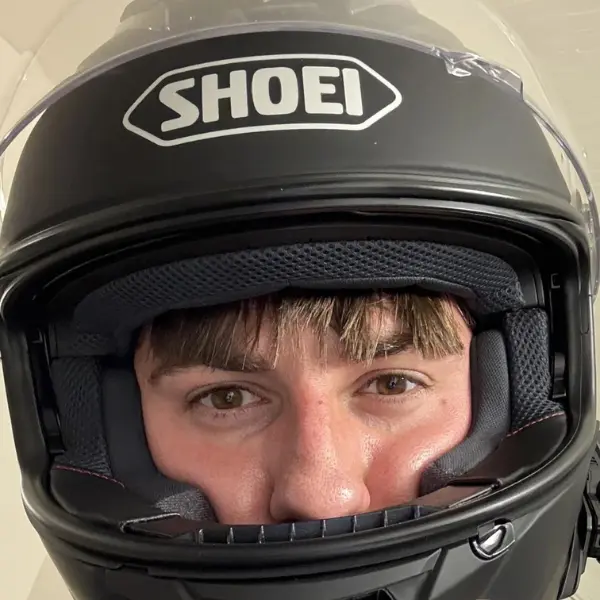
However, not all pressure points are just break-in tightness. If you feel a sharp, concentrated point of pain rather than general snugness, that usually means the helmet shape is genuinely not matching your head shape, and no amount of break-in will fix it. In that case, ask your dealer about swapping to thinner cheek pads or crown pads, which Shoei supports with its replacement pad system.
If pressure persists even after pad adjustments, the honest answer is that this helmet may not be the right shape for your head, and trying a different brand like Arai or Schuberth would be worth the effort.
Visor and Sun Visor Performance
The main clear visor is thick, robust and designed to provide a wide field of view, which is noticeable in shoulder checks and when riding in traffic. It can be cracked open slightly for extra airflow, and the mechanism is designed for quick, tool‑free changes without fragile side pods.
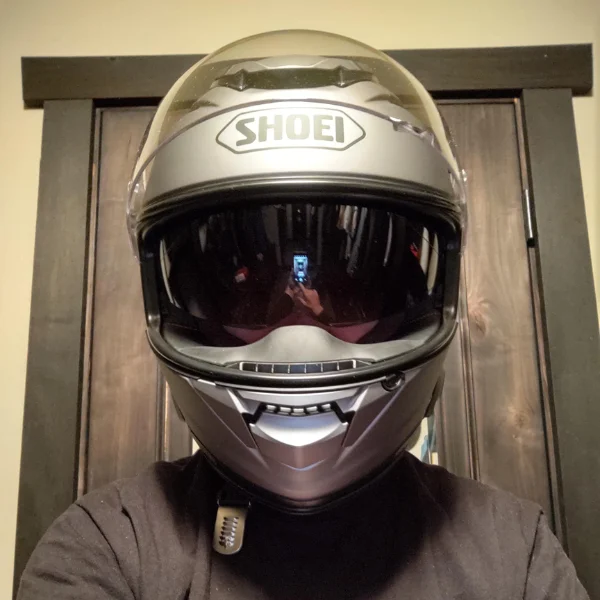
The integrated QSV‑2 internal sun visor drops lower than the previous generation, giving better coverage in bright sun and making it ideal for changeable light, tunnels or rides that run into dusk. Many bundles include a Pinlock anti‑fog insert for the main visor, which works very well, though riders can still sometimes fog the sun visor itself in cold or damp weather.
Ventilation and Heat Management
The GT‑Air II uses a large chin vent and redesigned top vents feeding a network of internal channels, with multiple exhaust ports at the rear. In warm weather, opening the chin and top vents can deliver a noticeable stream of cool air across the face and scalp, which is a clear benefit on summer tours or hot commutes.
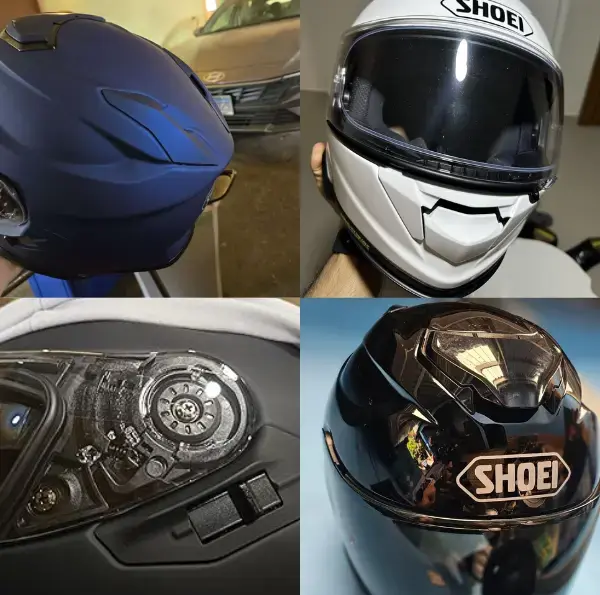
The “cracked‑open” visor position further boosts airflow and helps reduce fogging in mild conditions. Some testers have noted that while ventilation is strong overall, chin‑vent performance in very cold, wet conditions can feel less effective than ideal, especially if you can’t crack the visor without getting soaked.
Noise Levels at Speed
Shoei reshaped the shell and added features like a molded spoiler and noise‑reducing padding to keep wind noise low for a touring helmet. Many long‑term testers class the GT‑Air II as quiet to very quiet compared with typical full‑face or adventure lids, especially when combined with normal earplugs.

Noise will still vary depending on your bike, screen height and riding position, but for a lot of riders it makes motorway work less tiring and makes music or intercom conversations easier to hear. It isn’t completely silent, yet it strikes a strong balance between airflow and noise control for real‑world touring and commuting.
Build Quality, Safety, and Features
The GT‑Air II uses Shoei’s AIM multi‑composite shell with an EPS liner designed to manage impact forces while keeping the helmet relatively light for its class. Fit and finish are typically premium: paintwork has depth, moving parts feel solid, and the interior materials look and feel high‑end compared with mid‑range helmets.
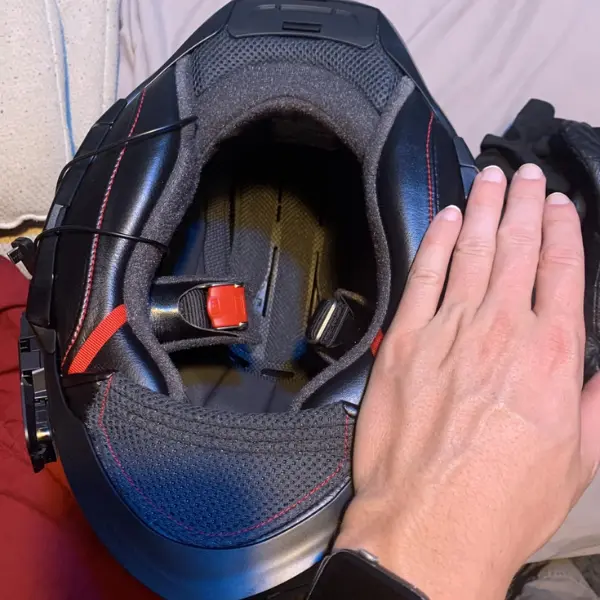
Safety‑oriented features include the emergency quick‑release cheek pad system, the micro‑ratchet strap for easy fastening and adjustment, and the aerodynamic design tuned in the wind tunnel for stability at speed. Shoei also designed the shell to accept the SENA SRL2 intercom cleanly, with speaker recesses and cable channels that keep wiring tidy and away from your ears.
Safety Certifications Explained: DOT, Snell, and ECE
The GT-Air 2 carries DOT FMVSS-218 certification, which is the required standard for helmets sold in the United States. If you are in Europe or buying for European roads, you will want to check for ECE 22.06 approval, which is the current standard required in most European countries.
A common question is why the Shoei GT-Air II does not carry Snell certification. Shoei’s position, shared by several premium helmet brands, is that Snell’s test protocols focus heavily on a very high single-impact threshold, whereas DOT and particularly ECE 22.06 test for multiple impacts and better reflect real-world crash conditions. This is a legitimate engineering perspective, and the absence of Snell does not mean the helmet is less safe. It is a different testing philosophy, not a shortcut.
For most road riders buying in the US, DOT is the legal requirement. If Snell certification matters to you for personal or track day reasons, there are helmets in Shoei’s lineup that carry it, but the GT-Air II is not among them.
How Long Does the Shoei GT-Air 2 Last?
Shoei recommends replacing the GT-Air II after five years from first use, or seven years from the manufacture date printed inside the helmet, whichever comes first. This is because the EPS liner, adhesives, and shell materials degrade over time even without any visible damage or crash involvement.
In practical terms, if you bought a new helmet in 2026, you should plan to replace it around 2031 regardless of how it looks. After a crash, replace it immediately even if there is no visible damage, since EPS liners compress on impact and do not recover.
Intercom and Everyday Practicality
The GT‑Air II is one of the few full‑face helmets designed from the start to accept a specific integrated intercom system—the SENA SRL2—so the units sit flush and keep the helmet’s aerodynamics and noise control intact. At the same time, riders have successfully fitted other systems like Cardo units by using the existing speaker recesses and routing channels inside the liner.
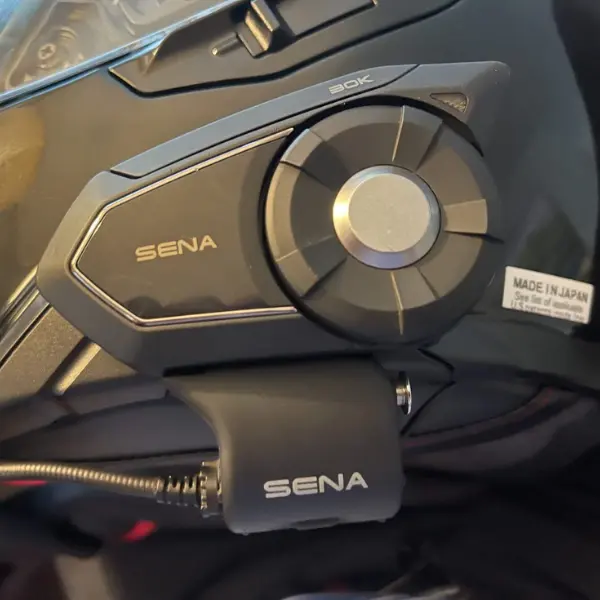
The quick‑release strap is particularly handy if you stop frequently for fuel, photos or short breaks, and many riders find it easier and faster than a traditional double‑D ring, especially with gloves on. Combined with the drop‑down sun visor and decent all‑weather performance, this makes the GT‑Air II feel like a very practical, everyday helmet rather than something you only wear on special rides.
Ratings Summary
|
Aspect |
Rating (1–5) |
|---|---|
|
Comfort |
4.5/5 |
|
Visor |
4.5/5 |
|
Ventilation |
4.0/5 |
|
Noise |
4.0/5 |
|
Quality |
5.0/5 |
|
Value |
4.0/5 |
Pros and Cons of Shoei GT Air II
Strengths
Weakness
Shoei GT-Air 2 vs GT-Air 3: Which Should You Buy?
If you are looking at this review in 2026, you have probably noticed that Shoei has now released the GT-Air 3. The natural question is whether to save money on the II or step up to the III. Here is the honest breakdown.
The GT-Air III brought improvements to ventilation, a revised shell shape for slightly better aerodynamics at highway speeds, and a refreshed interior lining. The sun visor mechanism was also tweaked for smoother operation. For riders who do a lot of high-speed motorway touring, the III’s aerodynamic refinements are a genuine upgrade.
That said, the GT-Air 2 is not suddenly a bad helmet. If you find it at a significantly reduced price as older stock, it remains a very capable choice for most road riders and commuters. The core safety architecture, noise performance, and comfort of the II are still competitive. The main reason to pay more for the III is if you want the latest shell tuning and the improved ventilation in hot climates.
Quick Recommendations
Shoei GT‑Air II vs Alternatives
In the premium sport‑touring segment, the GT‑Air II competes with helmets like the Arai Quantic, Shark Spartan GT and higher‑end HJC touring models. The Shoei typically undercuts Arai on price while offering quieter performance and integrated intercom options, though Arai often has even more aggressive ventilation and a slightly different fit philosophy.
Compared to cheaper touring lids, the GT‑Air II stands out for its combination of refined aerodynamics, noise control, finish quality and long‑term comfort, which is where much of the extra money goes. If you ride big miles or tour regularly, those gains become more noticeable than they might on occasional short rides.
Is the Shoei GT‑Air II Still Worth It in 2026?
Although newer helmets continue to appear, the GT‑Air II remains a strong choice in 2026 if you want a quiet, comfortable, feature‑rich touring helmet with proven real‑world performance. It may not be the absolute cheapest or the lightest on the market, but for many road riders it still hits a sweet spot between safety, comfort, noise and practicality that justifies its premium status.
If you value all‑day comfort, integrated sun visor convenience, and clean intercom integration more than shaving a few grams or a few bucks from the price, the GT‑Air II is still very easy to recommend.
FAQs
Does the Shoei GT‑Air II run small?
The GT‑Air II has a snug, touring‑oriented fit that many riders find true to size, but some may feel initial tightness that eases as the interior breaks in. Because of the pad system and three shell sizes, you can usually fine‑tune fit with help from a shop if needed.
Is the Shoei GT‑Air II good for glasses wearers?
Many riders with glasses can use the GT‑Air II comfortably, thanks to the internal shape and padding that generally allow frame arms to sit without too much pressure. As always, trying it on with your usual glasses is the safest way to confirm.
Is the Shoei GT‑Air II good for long‑distance touring?
Yes, the GT‑Air II is specifically aimed at touring and all‑round road use, with low noise, stable aerodynamics, a comfortable liner and the convenience of a built-in sun visor and intercom‑ready design.
Can I use a Cardo Packtalk with the Shoei GT-Air II?
Yes. While the GT-Air II is optimised for Sena’s SRL2 intercom system, the speaker pockets and cable routing channels in the liner accommodate other Bluetooth systems including Cardo units. The fit is not as seamless as with the SRL2, but many riders use Cardo units in the GT-Air II without issues.
How do I know if my Shoei GT-Air II fits correctly?
A correctly fitting GT-Air II should feel snug on your cheeks and crown without any single sharp pressure point. When you rock your head forward and back, the helmet should move your skin slightly without wobbling on your head. If you can fit more than one finger easily between your forehead and the helmet lining, it is likely too large. If you feel sharp pain within five minutes, it is likely the wrong shape rather than just too tight.
Is DOT-only sufficient for street riding, or do I need Snell/ECE?
Yes, DOT-only is sufficient for legal street riding in the United States. DOT FMVSS-218 is the federal minimum required standard, and the Shoei GT-Air II meets it. You are fully road-legal with it on any US public road.

Hi, I’m James Dean. My motorbike obsession started at age seven with a 50cc bike, and I’ve been riding ever since. From motocross in my teens to cruising and snowmobiling today, I’ve got over 15 years of experience. As a mechanical engineer and passionate rider, I founded gearschoice.com to share my insights and help you find the best motorcycle gear.