Bell Z20 MIPS Review 2026: Pros, Cons & Verdict
Last Updated On: May 15, 2026
The Bell Z20 MIPS is one of the most complete road cycling helmets available at its price point. It earns its flagship status through an outstanding fit system, genuine airflow performance, and a smart integration of MIPS technology that actually improves ventilation rather than hindering it. At around $130, it is not cheap, but the combination of features on offer makes it difficult to beat for serious road cyclists.
Overall Rating: 8.5 / 10
|
Category |
Score |
|---|---|
|
Comfort and Fit |
9/10 |
|
Ventilation |
8.5/10 |
|
Safety Technology |
9/10 |
|
Weight |
7.5/10 |
|
Value for Money |
8/10 |
|
Style |
8.5/10 |
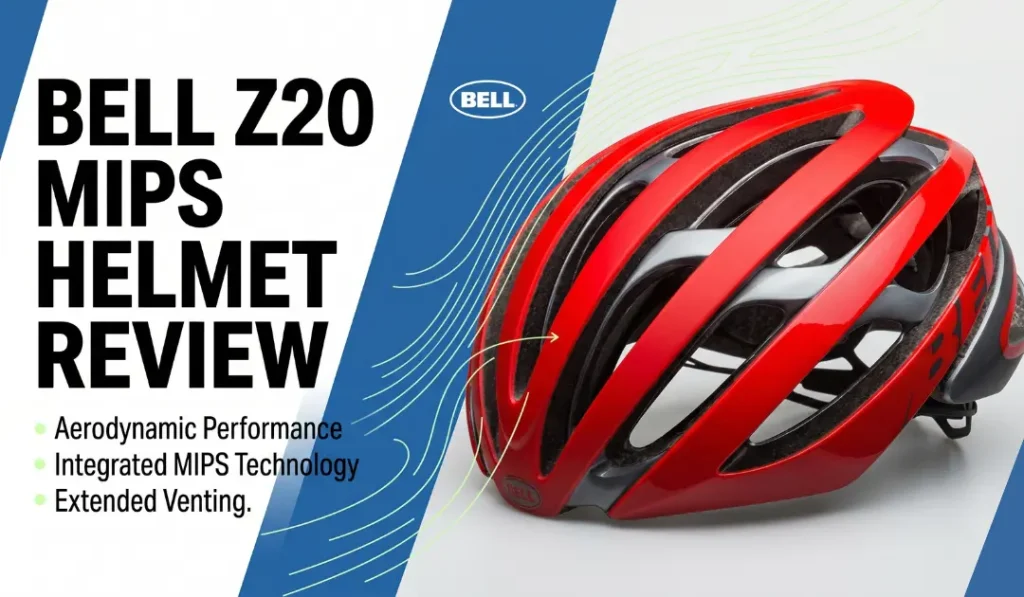
Overview of Bell Z20 MIPS
This review is written for road cyclists and gravel riders who want honest, detailed information before spending $130 or more on a helmet. Whether you are comparing the Bell Z20 MIPS against the Giro Aether, looking at the step up from the Z20 standard to the Aero model, or simply trying to understand whether the MIPS technology justifies the price, this guide covers everything you need to make a confident decision.
Key Specifications
|
Specification |
Detail |
|---|---|
|
Helmet Type |
Road cycling |
|
Construction |
Progressive Layering (dual EPS foam + polycarbonate shell) |
|
Safety Technology |
MIPS Evolve integrated into Float Fit Race system |
|
Vent Count |
18 vents |
|
Airflow Channels |
7 across the top, 3 at the rear |
|
Retention System |
Float Fit Race (height, width, tension adjustable) |
|
Padding |
X-Static antimicrobial with sweat guide brow pad |
|
Tested Weight |
336g (size L) |
|
Sizes Available |
S, M, L |
|
Colors |
6+ colorways including the Zephyr Ghost reflective finish |
|
Recommended Use |
Road cycling, cyclocross, gravel |
|
Price |
Around $130 (MSRP) |
|
Certification |
CPSC (USA) |
What Is the Bell Z20 MIPS?
Bell has been making helmets for over 60 years, and the Z20 MIPS is the brand’s flagship road cycling lid. It sits at the top of Bell’s road lineup, above the Stratus and below the Aero Z20 variant, and it is designed to strike a practical balance between aerodynamics, ventilation, and protection.
What sets the Z20 apart from most helmets in its class is not any single feature in isolation but the way several systems work together. The MIPS layer is built directly into the retention cradle rather than sitting as a separate floating shell inside the helmet. The EPS foam uses two separate density layers rather than one uniform block.
The retention system adjusts in three directions rather than the usual one or two. The result is a helmet that feels more purposefully engineered than most competitors at a similar price. If you are also considering open face or full face options for motorcycle use, it is worth knowing the Z20 is designed purely as a road cycling helmet and is not DOT rated for motorcycle use.
Progressive Layering Technology Explained
Most bicycle helmets use a single block of EPS (expanded polystyrene) foam as the main impact absorber. Bell’s Progressive Layering system takes a different approach by using two separate layers of EPS foam, each engineered to a different density.
The outer layer is designed to manage and deflect the initial force of an impact. The inner layer, which sits closer to the rider’s head, is tuned to absorb and dissipate the remaining energy. Sandwiched between these two foam layers is the structural EPS cage that gives the helmet its shape. This arrangement allows Bell to tune the helmet’s crash performance more precisely than a single-density foam liner allows.
The practical effect for the rider is a helmet that feels notably well constructed, with a satisfying solidity that cheaper single-density lids lack. The layered construction also contributes to the Z20’s compact, sleek silhouette because Bell can maintain impact performance without having to bulk up the foam thickness. According to Bell’s official source, the Progressive Layering system is what makes the Z20’s low-profile shape possible without compromising safety standards.
MIPS Evolve: How Bell Does It Differently
Standard MIPS (Multi-directional Impact Protection System) works by placing a thin, low-friction plastic liner between the helmet foam and the rider’s head. This liner can slide a few millimeters in any direction during an angled impact, reducing the rotational forces transmitted to the brain. The science behind MIPS is well established, and MIPS AB’s own research confirms that rotational motion is one of the main causes of serious brain injuries in cycling crashes.
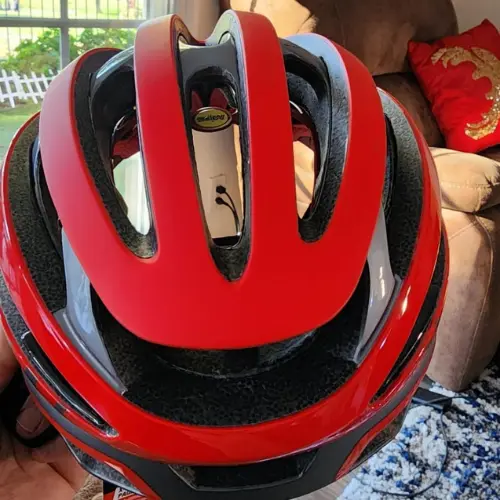
Bell’s implementation, called MIPS Evolve, goes a step further. Rather than adding a separate floating liner that sits independently inside the helmet, Bell integrates the MIPS slip plane directly into the Float Fit Race headband retention system. This means the headband cradle itself acts as the interface between your head and the helmet shell.
The advantage of this approach over conventional MIPS is significant. A standard MIPS liner covers much of the inner surface of the helmet, effectively placing a thin plastic sheet between the rider’s head and the ventilation channels. By integrating the slip plane into the headband, Bell removes this plastic barrier, which means air can flow more directly across the head. The result is a helmet that is simultaneously safer and better ventilated than a comparably specced traditional MIPS design.
Float Fit Race Retention System
The Float Fit Race system is one of the Bell Z20’s strongest selling points and the feature most often praised in independent testing. It is worth spending time understanding what makes it stand out.
Most helmet retention systems adjust tension at a single point at the rear of the head. This means tightening the dial pulls the cradle inward at the back, which can create pressure points on some head shapes. The Float Fit Race system wraps the cradle fully around the circumference of the head, so tensioning the dial creates an even, 360-degree fit. The practical effect is a secure feel without the hotspot pressure that cheaper systems often produce.
In addition to the tension dial, the system allows three-way adjustment. The height of the cradle can be set in four positions to accommodate different head depths. The width of the rear cradles, which cup the back of the skull, can be adjusted independently. And the tension dial controls the overall tightness of the full circumference band. Together, these adjustments make it possible to achieve a genuinely tailored fit across a wide range of head shapes and sizes.
It is also worth noting that the MIPS Evolve layer is integrated directly into this cradle, as explained in the section above. This means the slip plane is always positioned correctly relative to the head, regardless of how the rider adjusts the cradle settings. On helmets with separate MIPS liners, the liner is a fixed size and does not adapt when the retention system is adjusted, which can reduce the effectiveness of the protection for riders at the smaller or larger end of a given size range.
Ventilation: 18 Vents and 7 Channels
Ventilation is one of the areas where the Bell Z20 MIPS genuinely stands out in its price class, and it is worth looking at why the numbers tell more than just a headline story.
The Z20 has 18 vents in total. Seven of these form channels running across the top of the helmet from front to back, with three additional channels at the rear. The front brow vents draw cool air in across the forehead, the top channels carry it across the crown, and the rear exhaust ports push warmed air out. This front-to-back airflow design is more effective than helmet designs where vents are scattered without a deliberate channelling structure.
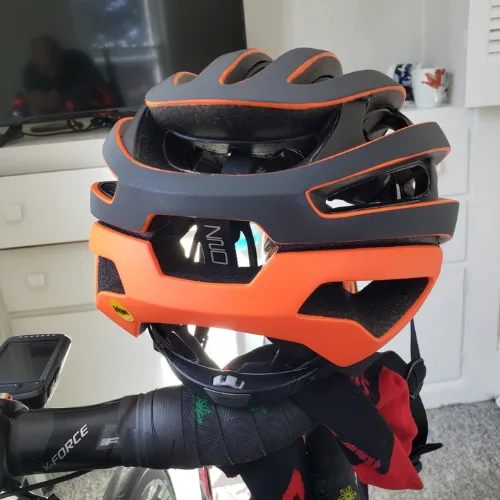
Bell’s over-brow ventilation system places intake ports at the very front of the helmet, positioned specifically to catch the incoming airflow from the riding position. The combined effect of this placement and the rear exhaust geometry is noticeable on the road. Even during climbs, where speed drops and airflow reduces, the Z20 remains comfortable.
The ventilation benefit of MIPS Evolve also plays a real role here. Because the MIPS slip plane is integrated into the headband rather than covering the inner foam surface, there is no continuous plastic sheet slowing the movement of air across the head. For riders who have previously worn helmets with conventional MIPS and found them slightly stuffy, this is a meaningful practical difference.
One area where the Aero version of the Z20 makes a different trade-off is worth mentioning. The Z20 Aero reduces the vent count to 10 and adds a polycarbonate shell over the front section to reduce aerodynamic drag. The standard Z20 reviewed here is the better choice for riders who prioritise ventilation over aerodynamics, while the Aero variant suits time trialists and riders on flat, fast courses.
Comfort and Padding
Bell uses X-Static padding throughout the Z20. X-Static is a silver-based antimicrobial fabric that reduces the growth of odor-causing bacteria. For cyclists who ride regularly in warm conditions, this is a practical benefit because it extends the time between washes without the helmet developing the musty smell that plain foam padding produces.
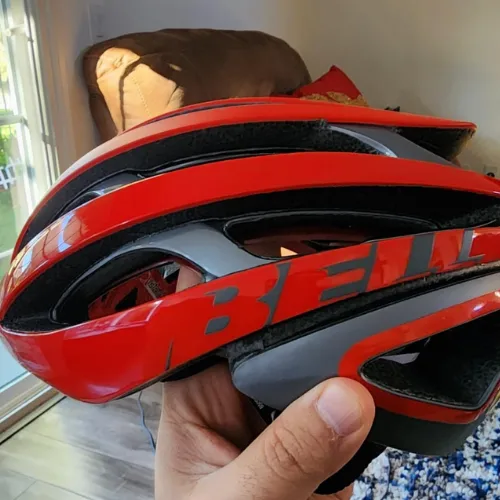
The padding layout inside the Z20 is worth noting separately from the material. The front brow pad is shaped into what Bell calls a sweat guide. Rather than simply absorbing moisture as it builds up at the forehead, the brow pad’s shape is designed to direct sweat outward toward the edges of the helmet, away from the eyes and away from the inside of sunglasses. Riders who have struggled with sweat dripping onto lenses during long summer rides will find this a genuinely useful feature rather than a marketing point.
Bell also includes a spare set of X-Static pads in the box. This means a rider can swap in a clean set while the used pads go through a wash cycle, eliminating any downtime caused by waiting for padding to dry. The helmet also comes with a soft carrying case for storage and transport, which is a thoughtful addition at this price point and protects the shell from scratches in a kit bag.
Weight: How Does It Really Compare?
The Bell Z20 MIPS in size L comes in at 336 grams when placed on a scale. This puts it in the mid-range category for flagship road helmets rather than the lightweight end. For context, the Abus Gamechanger, which is a dedicated aero helmet, weighs around 256g in a medium, and the Smith Ignite weighs approximately 277g in the same size.
This is an important point to be clear about because some older versions of this review described the Z20 as exceptionally light. That is not accurate. What is accurate is that for a helmet carrying dual-density EPS foam, a MIPS integration, a full-circumference retention system, and premium antimicrobial padding, 336g is a reasonable weight. The engineering that goes into the Z20 means it is doing more work per gram than most of its rivals.
For the majority of road cyclists, a difference of 20 to 30 grams between helmets is not noticeable during a ride. Weight becomes meaningful primarily to competitive climbers who are counting every gram of kit, and for those riders, a dedicated ultralight lid will always be the better choice over the Z20 regardless of its other qualities.
Sizing, Colors, and What Comes in the Box
The Bell Z20 MIPS is available in three sizes: Small, Medium, and Large. Bell’s sizing uses head circumference measurements, so it is worth measuring with a soft tape around the widest point of the head, just above the eyebrows, before ordering.
The helmet ships in more than six colorways. These include conventional matte and gloss finishes across black, white, blue, and red combinations. The standout option for riders who spend time on roads in low light conditions is the Zephyr Ghost finish, which uses a reflective coating across much of the helmet surface. The Ghost finish reflects light dramatically when hit by vehicle headlights, making it a practical safety choice beyond its aesthetic appeal.
In the box with the helmet you will find:
- The Bell Z20 MIPS helmet
- One spare set of X-Static padding inserts
- A soft carrying case
- Bell documentation and warranty card
The spare padding set in particular is worth factoring into the value calculation against competitors that include only the padding fitted to the helmet.
Head Shape and Fit Characteristics
The Bell Z20 is built around an intermediate-oval head form, which is the most common head shape among adults but sits between the extremes of a perfectly round head and a noticeably elongated oval. In practice, this means the Z20 tends to fit well for riders with oval to intermediate-oval heads, while riders with very round heads may find the fit slightly snug at the sides.

This is consistent with Bell’s general fit profile across its road helmet range. Bell helmets have historically been favoured by riders with narrower heads who find Giro’s rounder-fitting shells a poor match. Multiple real-world user accounts confirm that riders who have worn Giro helmets for years and found them uncomfortable at the temples often find Bell’s shape a significantly better fit without needing any break-in period.
If you are unsure of your head shape, a simple way to assess it is to look at the top of your head in a mirror. A head that looks roughly circular when viewed from above is round oval. One that looks slightly longer front to back than side to side is intermediate oval. One that is noticeably longer is long oval. The Z20 is best suited to the first two categories.
Real-World Riding Experience
Putting the Bell Z20 MIPS on for the first time, the most immediate impression is how little effort it takes to dial in the fit. The Float Fit Race dial at the rear moves smoothly, and because the cradle wraps the full circumference of the head, a small adjustment creates an even change in pressure all around rather than a concentrated tug at the rear. Most riders find their optimal setting within the first two minutes of wearing the helmet.
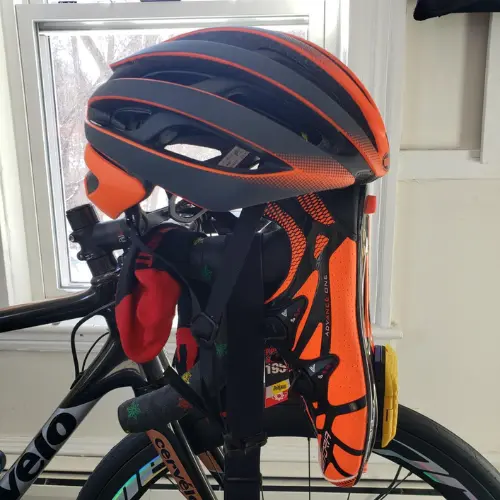
On the road, the ventilation performance is the next thing to notice. At moderate speeds, around 20 to 25 km/h, the airflow through the helmet is clearly perceptible across the scalp. On warmer days, the difference between sitting stationary and moving at even a modest pace is significant. The front brow vents do a particularly effective job of sending air across the forehead, which is where heat tends to concentrate first during climbing.
At higher speeds on descents or flat sections, the Z20 sits quietly on the head with minimal movement or buffeting. The full circumference retention cradle distributes the fit evenly enough that there is no sensation of the helmet sitting on a single pressure point. Extended rides of three to four hours do not produce the familiar post-ride headache that some riders associate with conventional retention systems.
The sweat guide brow pad works as described. During rides in warm conditions, moisture is directed toward the outer edges of the helmet rather than dripping down the bridge of the nose onto glasses. It is not a perfect system on extremely hot days or during very intense efforts, but it meaningfully reduces the problem compared to plain foam padding.
The X-Static antimicrobial padding also lives up to its billing over multiple rides. After three or four sessions without washing, the padding does not develop the sharp smell that cheaper materials produce. This is a small quality-of-life detail, but it matters on long training blocks when daily washes are not practical.
Strap System: A Known Niggle
The strap system on the Bell Z20 MIPS deserves honest attention because it is the one area where the helmet’s premium price does not fully deliver.
The webbing material used for the chin straps is noticeably firm compared to the softer strap material found on some rivals at similar prices. On longer rides, some riders find the straps slightly uncomfortable against the underside of the chin, particularly during warm weather when sweat makes the skin more sensitive to friction.
The more commonly reported issue is strap length. Bell ships the Z20 with straps that are longer than most riders need, which means excess webbing hangs free below the buckle and flaps in the wind. The fix is simple: trim the excess with scissors and melt the cut end lightly with a lighter to prevent fraying. This is a minor inconvenience and takes two minutes, but it is the kind of detail a helmet at this price point should not leave to the rider to sort out.
The strap anchoring is also worth noting. On some competing helmets, the rear of the strap system can be fed through a slot in the headband or foam liner, allowing the position of the chin strap to be adjusted from side to side to sit symmetrically on different face shapes. On the Z20, the straps are anchored permanently to fixed points on the helmet shell, which limits lateral adjustment. For most riders this is not an issue, but riders with asymmetric face structures may find this frustrating.
Sunglass Compatibility
The Bell Z20 MIPS includes rubberized holders built into the front vents. These allow riders to park sunglasses on the helmet at the start of a ride in low light, or during a descent when glasses fog up, without having to hang them from a jersey pocket or tuck them under a strap.
The holders grip the glasses arms firmly enough to keep them secure during normal riding, including sprinting and climbing efforts. They do not, however, grip with enough force to hold glasses during very rough gravel sections or when removing a jersey in a hurry causes the helmet to bump around.
For riders who prefer to push glasses into the front vents for storage, the vent spacing on the standard Z20 accommodates most frames. Thicker temple arms may require a firmer push to seat securely, but standard cycling sunglasses with slim arms fit without difficulty. The Aero variant of the Z20 has fewer and differently positioned vents, which makes this function slightly less reliable on that model.
Cold Weather Use
The Z20’s generous ventilation, which is a clear strength in warm conditions, becomes a consideration in cold or wet weather. With 18 vents and an open channel design, the helmet allows a significant amount of cold air to contact the scalp in temperatures below about 10 degrees Celsius. Riders who train year-round will want to use a thermal cycling cap or skull cap underneath the Z20 during winter rides.
This is not unusual for a high-ventilation road helmet and is a trade-off most cyclists who prioritize summer performance are willing to accept. The Z20 is not designed as a winter-specific lid. If cold weather riding is the primary use case, a helmet with fewer vents or a dedicated cold weather model would be a more logical choice.
For cyclocross riders specifically, CX Magazine’s reviewers noted that the open vent design means additional headgear is needed during the cold phases of the cyclocross season, while the ventilation is a genuine performance advantage during the high-intensity efforts that characterize the discipline.
Pros and Cons
Pros
- MIPS Evolve integration improves both protection and ventilation simultaneously
- Float Fit Race offers genuine three-way adjustability with full circumference contact
- 18 vents and 7 top channels deliver strong real-world airflow performance
- X-Static antimicrobial padding resists odor across multiple rides
- Sweat guide brow pad meaningfully reduces drip onto glasses
- Spare padding set and carrying case included in the box
- Rubberized sunglass holders built into front vents
- Strong style with multiple colorways including the reflective Ghost finish
- Works well for road cycling, gravel, and cyclocross use
Cons
- Strap webbing is firm and straps ship longer than most riders need
- Straps are permanently anchored with no lateral adjustment
- At 336g (size L), it is mid-range rather than lightweight for its class
- Not well suited to very cold weather without additional head covering
Value for Money
At around $130, the Bell Z20 MIPS sits at the upper end of the mainstream road helmet market but below the truly ultra-premium tier occupied by helmets above $300. For that price, you receive a helmet with dual-density EPS construction, a best-in-class retention system, an advanced MIPS integration that genuinely improves ventilation, antimicrobial padding with a spare set included, rubberized sunglasses holders, and a carrying case.
Comparable helmets from Giro and Smith in the same price bracket typically include a standard MIPS liner, single-point retention adjustment, and no spare padding. On a feature-by-feature basis, the Z20 offers a genuinely strong package.
The main scenario where the Z20 represents poor value is for riders who prioritize raw weight above all else. At 336g, it is 60 to 80g heavier than dedicated ultralight helmets available at similar prices. For competitive climbers, that difference matters. For the majority of road and gravel cyclists who care about comfort, protection, and ventilation on long days in the saddle, the Z20 earns its price.
Who Should Buy the Bell Z20 MIPS?
Buy the Bell Z20 MIPS if:
- You ride road, gravel, or cyclocross and want a single helmet that performs well across all three
- Your head shape is oval to intermediate-oval
- Ventilation is a priority, particularly in warm climates or during high-intensity efforts
- You want a best-in-class fit system with genuinely useful three-way adjustability
- You value the long-term comfort of antimicrobial padding
- You wear sunglasses while riding and want an integrated storage solution
Look elsewhere if:
- Raw weight is your primary concern and you need a sub-280g option
- Your head is strongly round-oval and you find Bell shells uncomfortable
- You ride predominantly in cold conditions where maximum ventilation is a liability
- Your budget is closer to $150, where you can find strong alternatives at the Giro Agilis MIPS level
How Bell Z20 Compares to Rivals
Bell Z20 MIPS vs Giro Aether MIPS
The Giro Aether MIPS is the Z20’s most direct competitor at a similar price point. Both helmets use MIPS, both feature premium retention systems, and both are designed as flagship road helmets for serious riders.
The key difference is the MIPS implementation. The Aether uses a traditional MIPS liner, which means a thin plastic layer sits between the foam and the head across much of the inner surface. The Z20’s Evolve system integrates the slip plane into the retention cradle, which removes this layer and improves airflow. For ventilation, the Z20 has a practical edge.
The Giro Aether is generally considered a better fit for round-oval heads. If your head shape is more on the round side, the Aether’s shell geometry may suit you better. Riders with oval heads will likely prefer the Bell.
Bell Z20 MIPS vs Bontrager Ballista MIPS
The Bontrager Ballista is lighter than the Z20 at approximately 240g (medium) and is aimed more squarely at weight-conscious performance riders. It does not use a full-circumference retention cradle and offers less adjustability than the Float Fit Race system. For riders who want maximum adjustability and all-day comfort over pure weight savings, the Z20 is the stronger choice.
Bell Z20 MIPS vs Bell Z20 Aero MIPS
Within Bell’s own lineup, the choice between the standard Z20 and the Aero Z20 comes down to the ventilation-versus-aerodynamics trade-off. The Aero adds a polycarbonate shell over the front EPS section and reduces vents to 10.
It is notably lighter at around 279g for a medium and reduces drag measurably at speeds above 40 km/h. The standard Z20 reviewed here is the better choice for endurance riding, sportives, and any discipline where ventilation takes priority. The Aero suits time trial efforts and race days on flat courses.
Final Verdict
The Bell Z20 MIPS earns its position as a flagship road cycling helmet through coherent engineering rather than marketing. The MIPS Evolve integration is meaningfully better than the standard approach. The Float Fit Race system is genuinely one of the best retention systems at this price. The ventilation performs as described on the road. And the inclusion of spare pads and a carrying case shows attention to the complete ownership experience.
The strap system is the one genuine weak point, and the mid-range weight means this is not the helmet for riders obsessing over grams. But for the broad majority of road cyclists who want a well-rounded, comfortable, and safe helmet for training and sportive riding, the Bell Z20 MIPS is a strong choice that is difficult to fault at its price.
If you are building out your cycling kit, you may also find our comparison of the Giro Agilis MIPS useful, as it covers a strong alternative at a lower price point. For a broader look at helmet types and safety standards, our full face vs open face helmet guide covers the fundamentals of helmet protection that apply across all cycling disciplines.
Frequently Asked Questions
How much does the Bell Z20 MIPS weigh?
The Bell Z20 MIPS weighs 336 grams in Large size. A size Medium typically comes in around 300 grams. This places it in the mid-range category for premium road helmets. It is not the lightest option at this price, but the weight is reasonable given the dual-density EPS construction, full-circumference retention cradle, and integrated MIPS system it contains.
What is the difference between the Bell Z20 and the Bell Z20 Aero MIPS?
The standard Bell Z20 MIPS has 18 vents and is optimised for ventilation. The Bell Z20 Aero MIPS reduces the vent count to 10 and adds a polycarbonate aerodynamic shell over the front section to reduce drag at speed. The Aero version is also lighter, coming in at around 279g in a medium. Choose the standard Z20 for endurance and sportive riding where ventilation matters most, and the Aero for time trials and race days on flat courses where aerodynamics is the priority.
What head shape does the Bell Z20 MIPS fit best?
The Z20 is built on an intermediate-oval head form and fits oval to intermediate-oval head shapes best. Riders with very round heads may find the shell slightly tight at the temples. Bell’s fit profile generally suits riders who find Giro’s rounder shell too wide or who prefer a lower-sitting helmet on the head.
Is the Bell Z20 MIPS good for hot weather riding?
Yes. With 18 vents and seven front-to-rear airflow channels, the Z20 is one of the better-ventilated helmets in its class. The MIPS Evolve integration removes the inner plastic layer that conventional MIPS helmets use, which further improves airflow across the scalp. The sweat guide brow pad also helps manage moisture during intense efforts in the heat. On very slow climbs in extreme heat, some warmth builds up, which is normal for any enclosed helmet.
Does the Bell Z20 MIPS come with spare padding?
Yes. Bell includes a second set of X-Static padding inserts in the box. This allows the rider to swap in a clean set while the used pads are in the wash. The helmet also ships with a soft carrying case for storage and transport.
Can you wear glasses with the Bell Z20 MIPS?
Yes. The Z20 includes rubberized sunglass holders built into the front vents, which allow glasses to be stored securely on the helmet when not in use. The front vents also accept most sunglasses arms for storage in the traditional way. Standard cycling sunglasses with slim temple arms fit without issue.
How long does a Bell cycling helmet last?
Bell recommends replacing any helmet after a significant impact, even if visible damage is not obvious. For helmets with no impact history, the general guidance from helmet manufacturers and cycling safety organisations is to replace after three to five years of regular use, as EPS foam degrades gradually over time regardless of visible wear. If you notice any cracking, delamination, or changes in the fit system’s function, replace the helmet immediately regardless of age.
Is the Bell Z20 MIPS worth the price?
For most road and gravel cyclists, yes. The combination of MIPS Evolve, Float Fit Race, dual-density EPS, genuine ventilation performance, antimicrobial padding, spare pads, and a carrying case represents strong value at $130 when compared feature for feature against similarly priced rivals. The main exception is weight-focused riders, for whom a lighter helmet may be worth the reduced feature set.

Hi, I’m James Dean. My motorbike obsession started at age seven with a 50cc bike, and I’ve been riding ever since. From motocross in my teens to cruising and snowmobiling today, I’ve got over 15 years of experience. As a mechanical engineer and passionate rider, I founded gearschoice.com to share my insights and help you find the best motorcycle gear.