What Is a Football Helmet Made Of? The Complete Materials Guide
Last Updated On: July 16, 2026
Every Sunday, hundreds of players collide at full speed, and the only thing standing between their skulls and serious injury is a piece of equipment most fans never think twice about. In short, the answer is a hard polycarbonate shell paired with layers of energy absorbing foam, a metal face mask, a padded chin strap, and often a polycarbonate visor.
But that simple answer hides a surprising amount of engineering, and understanding it can help you appreciate why modern helmets look and perform so differently from the leather caps players wore a century ago. This guide breaks down every part of a football helmet, explains how manufacturers build them, and looks at where helmet technology is headed next.
The Outer Shell: The First Line of Defense
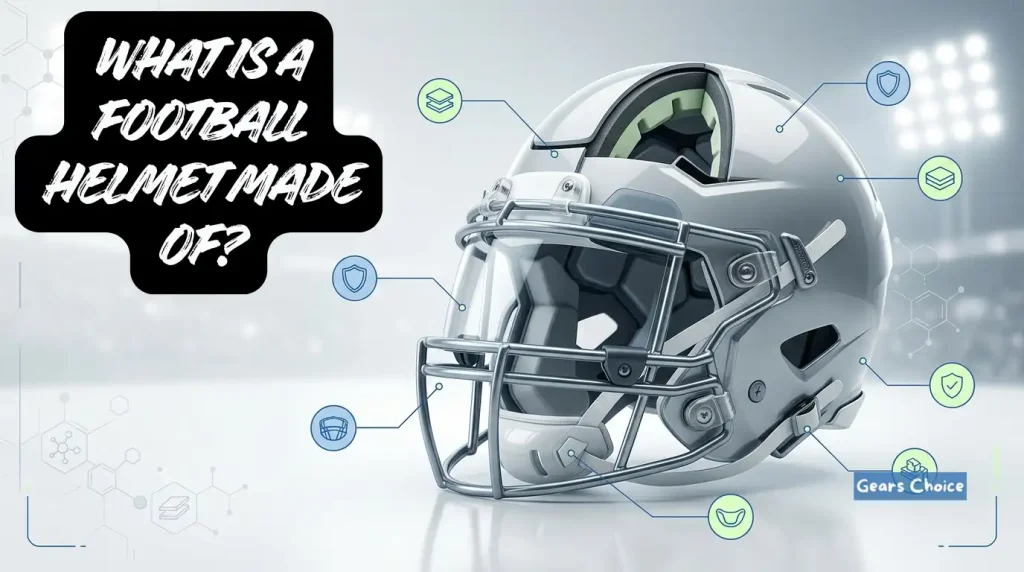
The hard exterior you see on the field is almost always made from polycarbonate, a tough, lightweight plastic that can absorb a serious hit without cracking. Most shells measure around 3.35 millimeters thick, and that thin layer does an enormous amount of work.
Polycarbonate stays reliable in cold weather too, which matters for teams playing outdoor games in January. Not every helmet uses the same shell material, though. Budget and youth level helmets sometimes rely on ABS plastic (acrylonitrile butadiene styrene), which costs less to produce but does not hold up quite as long as polycarbonate.
On the premium end, some manufacturers now blend in carbon fiber composites to cut shell weight even further, which reduces neck fatigue over a long game without sacrificing strength. Whichever option a brand chooses, this football helmet material has to pass the same basic test: absorb the force of a collision and distribute it across the shell rather than letting it concentrate on one spot.
What Are Football Helmets Made Out Of Inside the Shell?
The shell gets all the attention, but the padding underneath is doing the real safety work. Its job isn’t to feel soft. It’s to slow the head down gradually during an impact so the brain experiences less sudden force.
Most helmets use polyurethane foam or nitrile foam for this inner layer, sometimes reinforced with polyethylene foam for extra structure. These materials strike a balance that’s harder to achieve than it sounds: they need to be light enough for comfort, yet dense enough to keep absorbing hits play after play without collapsing permanently out of shape.
Newer helmets have added thermoplastic urethane, or TPU, liners built with small hollow domes or cones molded into a sheet. When a hit lands, those shapes collapse and spring back, spreading the impact over a wider surface instead of transferring it straight to the skull. Some designs also include air pockets or inflatable pods that let trainers and players fine tune the fit, which improves both comfort and how consistently the padding performs on every hit.
The Face Mask and Visor
The face mask has changed enormously since football’s early days, when a single bar of metal or plastic offered minimal protection. Today’s masks use multiple bars, and the material depends on the position. Linemen typically wear masks made from carbon steel because it can take repeated contact, while some skill position players choose titanium for a lighter option that still resists bending.
Stainless steel remains common as well, particularly because it holds up well against rust and wear over a full season. Every mask gets coated in a powder finish that resists impact damage and corrosion. Visors are a newer addition, generally made of the same shatter resistant polycarbonate used in the shell.
To be worn in most competitive leagues, a visor needs to meet the ANSI Z87.1 impact rating used for protective eyewear. It’s also worth knowing that the National Federation of State High School Associations prohibits tinted visors unless a player has a signed medical exemption, since coaches and officials need to be able to see a player’s eyes to spot signs of injury.
Chin Straps and Other Small but Mighty Parts
It’s easy to overlook the chin strap, but a poorly built one can undo everything else. Straps are typically woven from high tensile nylon webbing, strong enough to withstand pulling and sudden jolts without stretching out.
The cups that sit against the chin are often made from medical grade silicone, which stays comfortable through hours of practice. Buckles increasingly use quick release designs so medical staff can remove a helmet fast if a player needs attention on the field, without twisting the neck or head in the process.
What Are NFL Helmets Made Of at the Pro Level?
Professional players have more freedom than ever to choose their own helmet, and the core materials, polycarbonate shells, foam or TPU padding, steel or titanium face masks, stay largely the same. What changes at the NFL level is precision.
Manufacturers like Riddell, Schutt, and VICIS now offer models built around 3D scans of a player’s head, and some designs use a softer, slightly deformable outer layer instead of a purely rigid shell to help spread out low speed hits that are common in practice. If you’re curious how these design choices affect overall weight, our breakdown of how much a football helmet weighs explains how shell thickness and padding density each play a role.
How Are Football Helmets Made From Start to Finish?
Manufacturing a helmet is a more involved process than most people picture. It generally follows these steps.
- Polycarbonate pellets are melted down and injected into a mold under high pressure, forming the outer shell in roughly a minute per shell.
- The shell is cooled, trimmed, and inspected for defects before moving to the next stage.
- Holes are drilled for ventilation and for attaching padding, the chin strap, and the face mask.
- Foam or TPU padding is fitted and secured inside the shell, positioned to protect the areas most likely to take a hit.
- The face mask is bolted on, followed by the chin strap and any visor.
- Every finished helmet is tested against NOCSAE standards before it can be sold for competitive use.
This process explains why a new helmet isn’t cheap. If you want a sense of typical pricing across youth, high school, and professional grade models, we cover that in our guide to what a football helmet costs.
Certification: What NOCSAE and Virginia Tech Ratings Actually Mean
Every helmet used in organized football, from youth leagues to the NFL, has to meet standards set by the National Operating Committee on Standards for Athletic Equipment, commonly known as NOCSAE. Their seal confirms a helmet model passed lab tests simulating real impacts, but it doesn’t mean the helmet is concussion proof.
No helmet can guarantee that. NOCSAE standards are also intentionally design neutral, meaning they test performance rather than dictating exactly which materials a manufacturer must use, which is part of why you see so much variation between brands. For a more detailed, independent look at how individual models perform, many parents, coaches, and players check the Virginia Tech Helmet Lab’s football ratings.
Their five star system is based on 48 lab impacts per helmet across different speeds and locations, and it’s a useful second opinion alongside NOCSAE certification. You can also read more about how these safety requirements are enforced across school sports through the National Federation of State High School Associations.
Helmet Lifespan, Reconditioning, and Cleaning
A certified helmet doesn’t stay certified forever. Most programs require recertification and reconditioning every one to two years, a process that includes fully disassembling the helmet, inspecting the shell for hidden cracks, and replacing worn padding. Even with regular reconditioning, NOCSAE caps a football helmet’s total usable life at ten years, after which it has to be retired regardless of how well it looks on the outside.
Between reconditioning cycles, regular cleaning matters more than people realize, since sweat and bacteria can break down foam padding faster than normal wear. Our step by step guide on how to clean a football helmet walks through a safe process that won’t damage the shell or padding.
A Quick Look Back at Football Helmet History
Understanding the materials makes more sense with a little context. Football headgear started around 1893, when a Naval Academy midshipman wore a simple leather cap for protection. Leather remained standard for decades, offering almost no real impact protection compared to today’s equipment.
Everything changed in 1939, when the Riddell company introduced the first plastic suspension helmet, a shift that eventually made leather helmets obsolete by the 1960s. You can find a more complete timeline, including the shift to modern multi bar face masks, on Wikipedia’s football helmet page.
Comparing Helmets Across Sports
Football isn’t the only sport where material science drives player safety. Hockey helmets face different impact patterns and often prioritize a different padding structure, which you can see in our guide to the best hockey helmets currently available.
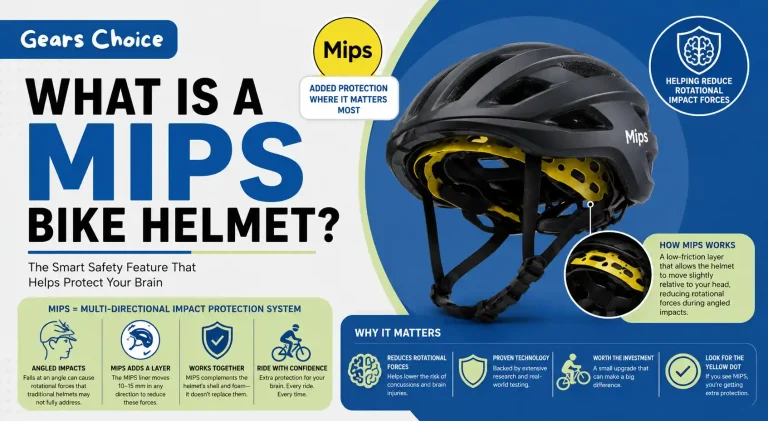
Bicycle helmets have also pushed innovation forward in ways football has started to borrow from, particularly around reducing rotational forces during an angled hit. If that topic interests you, our explainer on what MIPS technology does in bike helmets covers a concept that’s now influencing how football helmet padding gets designed too.
The Future of Football Helmet Designs
Helmet technology hasn’t stopped evolving. A few developments worth watching:
- Custom fit shells built from 3D scans of a player’s head, replacing generic one size padding with a liner shaped to the individual.
- Shells with varying thickness, thicker over high impact zones like the crown for a lineman, thinner elsewhere to save weight.
- Foams made from plant based materials such as corn derived resins, aiming to match current performance with less environmental impact.
- Liquid filled liners, which early research from Stanford suggests may reduce impact forces significantly compared to traditional foam alone.
- Recycled polycarbonate programs that give retired shells a second life in new equipment.
None of these fully replace the fundamentals covered above. Polycarbonate shells and energy absorbing padding remain the backbone of every football helmet on the market, and any new technology gets layered on top of, not instead of, those basics.
Final Thoughts
Helmet construction has come a long way from a leather cap and a prayer. Every layer, from the polycarbonate shell down to the chin strap buckle, is the product of decades of testing and real world data. For more helmet guides covering everything from fit to maintenance across different sports, visit Gears Choice.
Frequently Asked Questions
What material are football helmets made of?
The shell is almost always polycarbonate or ABS plastic, with foam or TPU padding inside, a steel or titanium face mask, and a polycarbonate visor if the player uses one.
Are football helmets still made of leather?
No. Leather helmets were phased out of professional football by the late 1940s and disappeared from the sport entirely by the 1960s once plastic proved far more protective.
How long does a football helmet actually last?
Most helmets can be recertified every one to two years, but NOCSAE limits total use to ten years, after which the helmet must be retired even if it still looks fine.
Do all football helmets use the same padding?
No. Padding varies by brand and price point, ranging from standard polyurethane foam to advanced TPU liners with pods designed to collapse and absorb impact more precisely.
Why do NFL players sometimes wear different helmets than college or youth players?
The core materials are similar, but professional helmets are often built with more advanced fitting technology and shell designs tuned specifically for the size and speed of adult collisions.

Hi, I’m James Dean. My motorbike obsession started at age seven with a 50cc bike, and I’ve been riding ever since. From motocross in my teens to cruising and snowmobiling today, I’ve got over 15 years of experience. As a mechanical engineer and passionate rider, I founded gearschoice.com to share my insights and help you find the best motorcycle gear.